Little Sky-High; Or, The Surprising Doings of Washee-Washee-Wang — Context and Discussion

(2 User reviews)   571
Butterworth, Hezekiah, 1839-1905 Project Gutenberg 2006 Not confirmed
Children -- Conduct of life -- Juvenile fiction; Siblings -- Juvenile fiction; Voyages and travels -- Juvenile fiction; Chinese -- Massachusetts -- Juvenile fiction Readers of public-domain and historical texts
Project Gutenberg digital edition en

Edition facts

Words 20,122
Reading time 88 min
Text sections 3

Before opening Little Sky-High; Or, The Surprising Doings of Washee-Washee-Wang — Context and Discussion, the edition data offers a quick orientation: 20,122 words, 1 hr 28 min estimated reading time, and 3 detected text sections.

The text analysis averages about 14.3 words per sentence, while the detected sections provide another way to judge how the source is divided.

Project Gutenberg metadata also associates the work with “Children -- Conduct of life -- Juvenile fiction,” connecting these edition facts with the source record’s subject description.

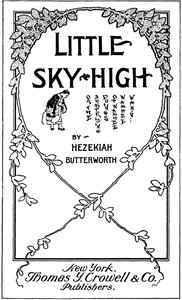
Hezekiah Butterworth's 1901 children's novel follows a young Chinese boy, Sky-High, who comes to live with the Van Buren family in Massachusetts. The story contrasts Chinese and American customs through episodes like kite-flying, fireworks, and Easter, while exploring themes of kindness and mutual understanding.
Share
Editorial Edition Score 4.5/5

Calculated from edition completeness, EPUB availability, text structure and catalogue metadata. Not a user rating.

How this score is calculated
  • Description quality20 pts
  • Title & short description10 pts
  • Source metadata20 pts
  • Text length15 pts
  • Chapters / structure15 pts
  • EPUB file integrity20 pts

Total of 100 points, scaled to a 2.5-5.0 range. Editions with an empty description or a missing EPUB file are not scored.

Edition quality

Read the Text

Nora was sole ruler of this cheerful realm below stairs; the only other inhabitants of the kitchen were the parrot and the kitten, and now this Chinese boy. Nora's special work-room was a great pantry with a latticed window. Near-by a wide door led out into a little garden of apple, pear, and cherry trees; the garden had a grape-arbor too, which ran from the door to a roomy cabin. Here was every convenience for washing and ironing.

Nora was a portly woman, with a round face, large forehead, and a little nose which seemed to be always laughing. She was a merry soul; and she used to tell "the children," as Charles and Lucy were called, "Liliputian stories," tales of the Fairy Schoolmaster of Irish lore.

The Chinese boy did not look up to Polly as she gazed and exclaimed at him, but shelled his peas.

Presently, however, the pretty kitten whirled the industrious boy's pigtail around in a circle until it pulled. Then he cast his almond eyes at her, and addressed her in a tone like the clatter of rolling rocks.

The kitten flew to the other side of the room, and Nora appeared from the pantry. When she saw the two children on the stairs, she put her hands on her sides and laughed with her nose. "We've a quare one here, now, haven't we?" said she.

Polly stretched her lovely head out into the room from the cage, and flapped her wings, and swung to and fro, and the kitten returned, whereupon the boy drew up his pigtail and tied it around his neck like a necktie.

"See, children," said Nora, pointing, "what your mother has brought home! She says we must all be good to him, and it's never hard I would be to any living crater. He came down from the sun, he says. What do you think his name is? And you could never guess! It's Sky-High, which is to say, come-down-from-the-sun. And a man in a coach it was that brought him. Sure, I never came here in a coach, but on my two square feet; he came from the consul's office--Misther Bradley's--and a ship it was that brought him there. Ah, but he's a quare kitchen-boy!

"But your mother, all with a heart as warm as pudding, she's going to educate him; and if he does well, she's going to promote him up aloft, to take care of all the foine rooms, and furniture and things, and to wait upon the table, and tend the door for aught I know. She made me promise I would be remarkable good to him--but it don't do no harm for me to say that he's a quare one! _he_ can't understand it--_he_ speaks the language of the sun, all like the cracking of nuts, or the rattling of a loose thunder-storm over the shingles."

"Sky-High?" ventured little Lucy mischievously.

The Chinese boy looked up, with a quick blink of his eyes.

"At your service, madam," said he in very good English.

Nora lifted her great arms.

"And he does speak English! Who knows but he understood all I said, and what the parrot said too. Poll, you go into your cage! 'At your service, madam!' And did you hear it, Lucy? No errand-boy ever spoke in the loikes o' that before! I'd think h'd been brought up among the quality. It maybe he's a Fairy Shoemaker, spaking the queen's court-language, and no errand-boy at all!"

A bell sounded up-stairs, and the two children ran back.

"Oh, mother, never was there a boy like that!" said Charlie.

"Well," said Mrs. Van Buren, "you shall tell your father how you found little Sky-High--it will be a pretty after-supper story. I want you to think kindly of him, for if he does well he is to stay with us a year."

The children found their father in the dining-room; and as they kissed him they both cried, "Oh, oh!"

"What is it now?" asked Mr. Van Buren. "What has happened to-day?"

"Wait until after supper," said Mrs. Van Buren; "then they shall tell you of a curious event in the kitchen. There really is something to tell," she added, smiling.

As Mr. Van Buren was a prudent, wise, and good-natured man, he left all the affairs of housekeeping to his wife. He had so seldom been "below stairs" that he never had even made the acquaintance of Polly, the lively bird of the kitchen. The kitten sometimes came up to visit him; on which occasions she simply purred, and sank down to rest on his knee.

After supper was over, Mr. Van Buren caught Lucy up.

"And now what amusing thing is it that my little girl has to tell me--something new that Nora has told you of the Fairy Shoemaker?"

"There's really a wonderful thing down in the kitchen, father," said Lucy; "wonderfuller than anything in the Fairy Shoemaker tales."

"And where did it come from?"

"Down from the sun, father, and Nora says it came in a coach!"

Mr. Van Buren turned to his wife.

"It came from the Consul's," she said--"from Consul Bradley's."

"Has Consul Bradley been here?" he asked, thinking some Chinese curio had been shipped over. Consul Bradley was a Chinese consular agent, a man of considerable wealth, with a large knowledge of the world, and a friend of the Van Buren family.

"No," said Mrs. Van Buren, "but his coach-man has brought me a kitchen-boy."

"Well, that _is_ rather wonderful! Is that what you have down-stairs, Lucy?"

"That doesn't half tell it, father," cried Charlie. "He's a little Chineseman!"

"I was in the Consul's office this morning," went on Mrs. Van Buren, smiling at her husband's astonishment; "and the Consul said to me, 'Wouldn't you like to have a neat, trim, tidy, honest, faithful, tender-hearted, polite boy to learn general work?' I said to the Consul, 'Yes, that is the person that I have been needing for years.' He said, 'Would you have any prejudice against a little Chinese servant, if he were trusty, after the general principles I have described?' I said to him, 'None whatever.' He continued: 'A Chinese lad from Manchuria has been sent to me by a friend in the hong, and I am asked to find him a place to learn American home-making ideas in one of the best families. Your family is that place--shall I send him?' So he came in the Consul's coach, as Lucy said, and with him an immense trunk covered with Chinese brush-marks. He seems to be a little gentleman; and when I asked him his name he said, 'The Consul told me to tell you to call me Sky-High.' He doesn't speak except to make replies, but these are in very good English."

"May I give my opinion?" asked little Lucy.

"Well, Lucy," said her mother, smiling, "what is your opinion?"

"He looks like an emperor's son, or a mandarin," said Lucy.

"And what put such a thought into your head?" asked her mother.

"The pictures on my Chinese fans," said Lucy promptly.

"Well," said Mrs. Van Buren, "if he does well, you shall treat him exactly as though he were the son of an emperor or a wang--he says that kings are called wangs in his land."

"Then he would be a little wang," said Lucy. "I will make believe he is a little wang while he stays."

So Sky-High became a little wang to Lucy; and a wonderful little wang he promised to be.

At Mr. Van Buren's wish, little Sky-High was sent for. The Chinese boy asked Charlie, who went down for him, that he might have time to change his dress so that he might suitably appear before "the mandarin in the parlor." (A "mandarin" in China is a kind of mayor or magistrate of rank more or less exalted.)

Charlie came back with the kitchen-boy's message. "He says that he wants a little time to change his clothes so that he may suitably appear before the mandarin in the parlor."

"The mandarin in the parlor!" exclaimed Mr. Van Buren, in a burst of laughter. "My father used to speak of mandarins--he traded ginseng for silks and teas at Canton in the days of the hongs--the open market or trading-places. That was a generation ago. There are no longer any store-houses for ginseng on the wharves of Boston. Yet my father made all his money in this way. 'The mandarin in the parlor.' Sky-High has a proper respect for superiors; I like the boy for that."

By and by the sound of soft feet were heard at the folding-doors.

"Come in, Sky-High," said Mrs. Van Buren.

The little kitchen-boy appeared, and all eyes lighted up in wonder. He wore a silk tunic fringed with what looked like gold. His stockings were white, and his shoes were spangled with silver. The broad sleeves of his tunic were richly embroidered--he seemed to wing himself in. A beautiful fan was in his hand, which he very slowly waved to and fro, as if following some custom. Mrs. Van Buren wondered if servants in China came fanning themselves when summoned by their master. Sky-High bowed and bowed and bowed again, then moved with a gliding motion in front of Mr. Van Buren's chair, still bowing and bowing, and there he remained in an attentive bent attitude. The kitten leaped up from Mr. Van Buren's knee, then jumped down, plainly with an intention to play with the tempting pigtail--but Lucy sprang and captured the snowy little creature.

"So you are Sky-High?" said Mr. Van Buren. "Well, a right neat and smart-looking boy you are!"

"The Mandarin of Milton!" said the glittering little fellow, bending. "My ancestors have heard of the mandarins of Boston and Milton, even in the days of Hoqua."

"Hoqua?" Mr. Van Buren looked at the boy with interest, "You know of Hoqua?"

"Who is Hoqua?" asked Mrs. Van Buren.

Mr. Van Buren turned to her, "I will tell you later."

"Hoqua, madam," said Sky-High, bowing to his mistress, "was the great merchant mandarin of Canton in the time of the opening of that port to all countries."

How did a Chinese servant know anything of Hoqua? This was the question that puzzled Mr. Van Buren. "Sky-High, how many people have you in your country?" he asked.

"It is said four hundred million."

"We have only seventy millions here, Sky-High."

"I have been told," said Sky-High.

"And who is ruler over all your people?" asked Mr. Van Buren.

"The Celestial Emperor, the Son of Heaven, the Brother of the Sun and Moon, the Dweller in Rooms of Gold, the Light of Life, the Father of the Nations."

"You fill me with wonder, Sky-High. We have a plain President. Do your people die to make room for more millions?"

"My people value not to die, O Mandarin!" said the boy.

"Such throngs of people--they all have souls, think you?"

A dark flush came upon little Sky-High's forehead. He opened his narrow black eyes upon his master. "Souls? They have souls, O Mandarin! Souls are all my people have for long."

"Where go their souls when your people die?"

"To their ancestors! With them they live among the lotus blooms."

"We will excuse you now," said Mr. Van Buren to Sky-High. "You have answered intelligently, according to your knowledge."

The kitchen-boy bowed himself out without turning his back towards any one, describing many glittering angles, and waving his fan. He looked like something vanishing, a bit of fireworks going out.

As he reached the stair, the little white cat sprang from Lucy's arms, and skipped swiftly after the curious inmate of the kitchen. The long, swinging braid was a temptation. The last glimpse Charles and Lucy had was of an embroidered sleeve as Sky-High reached backward and caught the kitten to his shoulder, and bound her fast with his queue.

Charlie clapped his hands. He thought there would be fun in the house. He knew he should like Sky-High. As they went up-stairs he said to Lucy, "The little Chinaman was a heathen, and father was a missionary."

Mr. Van Buren heard him, and called him back. "The little Chinaman was a new book," said he, "and your father was reading. See that you treat the boy well."

Mr. Van Buren's home was on Milton Hill. It overlooked Boston and the harbor. The upper windows commanded a glorious view in the morning. Before it glittered the sea with its white sails, and behind it rose the Blue Hills with their green orchards and woods. The house was colonial, with gables and cupola, and was surrounded by hour-glass elms, arbors, and evergreen trees. It had been built by Mr. Van Buren's father in the days of the China trade and of the primitive mandarin merchant, Hoqua.

Mr. Van Buren, a tea-merchant of Boston, received his goods through merchant vessels, and not through his own ships as his father had done.

The next morning Mrs. Van Buren went down early into her kitchen to assign Sky-High his work.

Nora, in a loud whisper that the birds in the apple-boughs might have heard, informed Mrs. Van Buren that the new Chinese servant was "no good as a sweeper," and asked what he did with his pigtail when he slept. "It must take him a good part of to-morrer to comb his hair, it is that long," she said. "And wouldn't you better use him up-stairs for an errand-boy altogether now? Sure, you wouldn't be after teaching him any cooking at all?" Nora was an old servant and had many privileges of speech.

Mrs. Van Buren smiled, and arranged that little Sky-High should wash and iron clothes in the cabin under the blooming trees, at the end of the arbor.

"And if you learn well," said she, "I may let you tend the door, and wait upon the table, and keep the rooms in order."

"And then you will be up-stairs," said little Lucy, "where it is very pleasant."

"And now, Sky-High, tell me how it is that you can speak English so well," said Mrs. Van Buren, as they stood in the cabin, where the prospect of solitude seemed to please the boy. A gleam of something like mischief appeared on little Sky-High's face.

"And, Madame de Mandarin," said he, "I speak French too. _Parlez-vous Français_, Mademoiselle Lucy?" he added rapidly, turning to the little American girl. "_Pardonne_, Madame la Mandarin!"

"Sky-High will not say 'Mandarin' any more," said Mrs. Van Buren. "There are no mandarins in this country, and when Sky-High is called into the rooms above he will wear his plain clothes, not spangled clothes. Now, who taught you English?"

"Say mistress, Sky-High."

"My master, mistress."

"Where did you live in Manchuria?"

"In the house of a mandarin."

"And who was your master?"

"The mandarin, mistress."

"Do mandarins in China teach their servants to speak English?"

"Some mandarins do, your grace."

"Do not say 'your grace,' Sky-High, but simply mistress. Ladies have no titles in America. Where is the city in which you lived?"

"In Manchuria, on the coast, on the Crystal Sea."

The kitten came running into the kitchen, and at once leaped on to the end of Sky-High's pigtail.

The boy gave his pigtail a sudden whisk.

"No, no!" said Mrs. Van Buren in horror. "We have no pie-cats in this country. Was there an English teacher in your house?"

Little Sky-High was winding his pigtail about his neck for safety. He saw Lucy giggling, and a laugh came into his own eyes.

"_Pardonne_, mistress. We had an English trader at the hong--at the trade-house."

"Do they send servants to English teachers in China?"

"When they are to grow up and deal with English business, mistress."

"Did you meet English people at the hong?"

"I cannot name them. There were my lords and the admiral; and the American Consul he came, and the German Consul he came, and the American travelers they came, and Russian officers they came."

"How old are you, Sky-High?"

"There have passed over me fifteen New-Year days, mistress."

"Well, Sky-High," said his mistress, "I am going to give you this cabin under the trees, where you may do your washings and all your ironings. No one else shall come here to work. I have decided to have you begin to-morrow to bring up the breakfast."

The next morning Sky-High performed his first service at the breakfast-table. He brought up the coffee while Mr. Van Buren was saying grace. He paused before the table.

"Sleepy, sleepy!" he exclaimed softly, "all sleepy!"

Mrs. Van Buren put out her hand as a signal for him to wait. Sky-High did not understand, and the grace was concluded amid smiles.

Sky-High wondered much what had made the family sleepy at that time of the day. They did not go to sleep at the breakfast-table in China.

"The mistress and her people," said he to Nora, "shut their eyes and go to sleep at the breakfast."

"An' sure, it is quare you are yourself! They were praying. Don't you ever say prayers, Sky-High?"

"My country has printed prayers," said Sky-High with lofty dignity.

"You're a hathen people. Here we call such as you a 'hathen Chinee,' and there was a Californan poet that wrote a whole piece about the likes of you. Children speak it at school. Here is the toast--carry it up!"

Lucy liked to see the little olive-colored "wang" moving about. One day at the table she requested him to bring her a cup of tea. The little Chinaman well knew that Lucy and Charles were not permitted to have tea. He inquired whether he should make it in the American or the Chinese way.

"In the way you would for a wang," said Lucy.

Sky-High soon re-appeared, his tray bearing a pretty little covered cup and a silver pitcher.

"Where is the tea?" asked Lucy.

"It is in the cup, like a wang's," said Sky-High.

He poured the hot water on the tea, and fragrance filled the room.

Lucy, with a glance asking her mother's leave, tasted the tea she had roguishly ordered.

"We do not have tea like this," she said; "is it tea?"

"Like a wang's," said Sky-High, blinking.

"Where did you get it?" asked Lucy.

"Out of my tea-canister," said Sky-High.

Little Lucy did not drink the tea, for little Lucy had never drunk a cup of tea; but its fragrance lingered about the house through the day, and set her wondering what else the little Chinaman's immense trunk might hold.

It had been agreed between the Consul and Mrs. Van Buren that little Sky-High might talk with the family; and like her husband she found the Chinese boy "a new book." She asked him many a curious question about the "Flowery Kingdom," and one day she learned that "we never send our finest teas out of China." Yes "we" said the washee-washee-wang, as the neighbor-boys called him.

HOW SKY-HIGH CALLED THE GOVERNOR.

Cheerfully, in his fine blue linens, the little Chinese house-boy worked in his cabin a portion of every day. The bluebirds came close to sing to him and so did the red-breasted robins. Irish Nora and the parrot became very civil, and he grew fond of Charlie and Lucy.

Some of the boys on their way to and from school made his only real annoyance. Sometimes when his smoothing-iron was moving silently under his loose-sleeved hand, or he was hanging the snowy clothes on the lines, they would hide behind a tree or corner, and shy sticks at him calling, "washee-washee-wang!" He bore it all in an unselfish temper, until one day a big lump of dirt fell upon one of little Lucy's dainty muslin frocks as he was ironing it. Then he said something that sounded like, "cockle-cockle-cockle," and closed all the doors and windows.

At this crisis Charles and Lucy came to his side. They set wide again the doors and windows of the cabin under the green boughs, and promised him that they would forever be his true friends and protectors. "It is time we began to treat him like a wang, as mother wished," said Lucy to Charlie.

"The American boys throw dirt at me in the street," admitted little Sky-High, in a reluctant tone--he did not like to bear witness against anyone in this sunshiny world.

"I will go out with you," said Charlie, "when you are sent out to do errands. I will stand between you and the dirt. The dirt comes out of their souls."

"And I will watch around the corners and speak to them," said Lucy.

Butterworth’s novel opens with a domestic scene: Charles and Lucy return from school to find their mother has a surprise in the kitchen. The children are instructed to tip-toe and not laugh, establishing a tone of gentle curiosity. The surprise is a Chinese boy with “eyes like two almonds” and a braided queue—Sky-High, who becomes a servant and companion. The author’s note states the story is “partly founded on a true incident of a young Chinese nobleman’s education,” aiming to show “happy relations” between children of different countries. The opening chapters quickly introduce cultural contrasts: Sky-High’s reverence for Confucius, his wonder at American customs, and his playful interactions with the Van Buren children.

A Boy Between Two Worlds

Sky-High’s identity is shaped by his dual heritage. He is called “Washee-Washee-Wang” by local boys, a nickname that signals both his otherness and his resilience. In the kitchen, he is eager to learn American ways, yet he retains Chinese traditions: he speaks of Confucius, uses “prayer-wheels,” and celebrates with fireworks. The author uses Sky-High’s perspective to highlight differences in belief and custom. For instance, when Mrs. Van Buren explains Easter, Sky-High asks about heaven, and she responds that heaven is built by “Loving and Helping.” Sky-High then resolves to help others, even those who pull his queue. This moment shows his adaptability and moral growth, but the excerpts do not reveal whether he fully abandons his own beliefs.

The Kite and the Fireworks

Two episodes illustrate Sky-High’s integration into American life. In Chapter VII, he flies a kite that “opened a great mouth, and smoke seemed to issue from it,” a detail that blends Chinese invention with American spectacle. On the Fourth of July, Sky-High is delighted by firecrackers, which he says drive away evil spirits. He dances as crackers explode near his cabin, and later fires a “star” from his chest, astonishing the Van Buren’s friends. These scenes emphasize his joy in shared celebrations, but also his distinct cultural lens: he sees the American holiday through Chinese symbolism. The author does not resolve whether Sky-High’s customs are fully accepted or merely tolerated by the American characters.

Moral Lessons and Cultural Exchange

The novel repeatedly uses dialogue to teach moral lessons. Mrs. Van Buren reads the Beatitudes to Sky-High, and he responds by wanting to “live on forever.” When told about George Washington’s honesty, Sky-High counters that Confucius also told no lies, and that he himself tells no lies. These exchanges are not confrontational; instead, they show parallel values. The author’s note explicitly states the story’s didactic purpose: to illustrate “happy relations” between children of different countries. However, the excerpts do not show Sky-High’s own family or his feelings about leaving China. The narrative focuses on his adaptation, not his loss, which may reflect the era’s assumptions about assimilation.

Narrative Structure and Voice

Butterworth uses a third-person narrator who occasionally addresses the reader directly, as in the opening instructions to “tip-toe.” The chapters are short and episodic, each centered on a single event or lesson. The dialogue is simple and often explanatory, with characters like Mrs. Van Buren delivering moral statements. Sky-High’s speech is marked by grammatical quirks (“Sky-High, he tell no lies”) that signal his foreignness but also his earnestness. The excerpts suggest a pattern: Sky-High encounters an American custom, asks questions, and receives a lesson that he then applies to his own experience. This structure makes the book suitable for reading aloud, but the didacticism may feel dated to modern readers.

Readers approaching Little Sky-High should note that the excerpts cover only the first half of the story. The table of contents hints at later chapters involving a “House-Boy’s Care” and a journey to “the Little Wang’s Land,” which may shift the setting back to China. The author’s stated aim of fostering cross-cultural friendship is evident, but the book’s treatment of race and identity reflects early 20th-century attitudes. For a first reading, pay attention to how Sky-High’s voice evolves and whether the story maintains its focus on mutual understanding or becomes a one-sided lesson in American values.

Reading about Sky-High adjusting to Massachusetts made me remember watching my own cousin try to explain our family’s Easter ham to his new Korean in-laws. The awkward, gentle fumbling across customs felt familiar. Later, Jewel’s Story Book gave me that same quiet ache of childhood noticing difference without judgment—just a soft hum of kindness underneath. Jewel’s Story Book — Context and Discussion lingers in that warm space.

Madison Brown
2 weeks ago

Noah Taylor
1 week ago

5
5 out of 5 (2 User reviews )

Add a Review

Your Rating *
  • ...
    Megan Turner - 2 weeks ago
    An amusing and quirky tale that certainly stands out for its creative premise. The adventures of Little Sky-High are fast-paced and full of comedic moments that will appeal to young readers. However, the cultural portrayal of Washee Washee Wang may feel stereotypical to modern eyes, though it's clearly a product of its time. The plot is somewhat nonsensical, but that's part of its charm. Overall, a fun, light-hearted read with some dated elements.

  • ...
    Bruce Jack Beck - 1 week ago
    This book is problematic and not suitable for contemporary children. The character Washee Washee Wang is a caricature that relies on racial stereotypes, which is offensive. The story itself is disjointed and lacks a coherent plot, relying on absurd situations that don't make sense. Additionally, the language is peppered with outdated slang that even adults may struggle to understand. There are many better, culturally sensitive children's books available. I would not recommend it.

  • ...
    Maria Zimmerman - 1 week ago
    A whimsical and thoroughly entertaining story about a boy called Little Sky-High and his adventures with the enigmatic Washee Washee Wang. The author's playful language and imaginative scenarios are a joy to read aloud. The book is filled with clever wordplay and humorous situations that will delight both children and adults. It encourages creativity and celebrates the joy of storytelling. A unique gem that deserves a place on every child's bookshelf.


Reader reflection

How did this book work for you?

Your answers remain private and are stored only in this browser.
Your progress 0 / 10
1

Have you finished this book?

2

How did the book work for you overall?

3

Is this a title you would suggest to others?

4

How demanding did the text feel?

Related eBooks