About 413 minutes
Ran Away to Sea — Edition Insights
Childrens Adventures
94,953 recorded words. 10 minutes difference from this book's estimate.
View Gutenberg source #23853
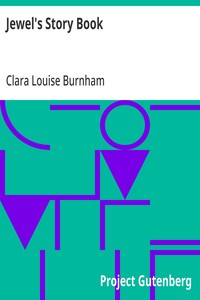
For Jewel's Story Book — Context and Discussion, the stored edition analysis reports 92,601 words, 6 hr 43 min estimated reading time, and 10 detected text sections.
The text analysis averages about 14.2 words per sentence, while the detected sections provide another way to judge how the source is divided.
Project Gutenberg metadata also associates the work with “Christian life -- Juvenile fiction,” connecting these edition facts with the source record’s subject description.
Explore this collection
These alternatives are selected using recorded categories and estimated reading time.
About 413 minutes
Childrens Adventures
94,953 recorded words. 10 minutes difference from this book's estimate.
View Gutenberg source #23853About 415 minutes
Childrens Adventures
95,449 recorded words. 12 minutes difference from this book's estimate.
View Gutenberg source #21066About 375 minutes
Childrens Adventures
86,194 recorded words. 28 minutes difference from this book's estimate.
View Gutenberg source #21461Search stored excerpts and compare books → Choose by your preferences →
Choices use stored catalog measurements. Estimates vary with reading speed. A shared category is a catalog label, not a claim that two books have the same argument or literary quality.
Search reads excerpt text stored with this catalog and links to its associated Gutenberg record. The connection is stored in the site database; this tool does not recheck that every excerpt is word-for-word identical to that external record. Excerpt search does not cover every chapter and does not verify historical publication dates.
Catalog snapshot checked: 2026-09-25. Coverage: 94 public books, 94 available source excerpts.
Read the complete public-domain text at its original source.
Read on Project GutenbergFrom the first telephone call, Burnham establishes a voice that is both brisk and tender. Mrs. Forbes's impatient "hello" and muttered "Drat the little lamb!" set a tone of harried domesticity, while Jewel's eager "Goody, goody!" and breathless questions about Nesselrode pudding reveal a child who navigates adult worlds with her own priorities. The author's choice to open with a phone conversation—a modern convenience in 1904—immediately signals a story rooted in everyday technology, not fantasy. Yet the dialogue carries emotional weight: Mr. Evringham's gentle "Softly, softly. Don't break the 'phone" shows a grandfather attuned to his granddaughter's excitement, even across miles.
Burnham distinguishes characters through their word choices. Mrs. Forbes uses clipped, exasperated phrases: "Drat the little lamb!" and "Nothing would surprise me less." Her speech is efficient, almost grudging. Jewel, by contrast, speaks in exclamations and eager questions: "Goody, goody!" and "Oh, oh, oh!" The grandfather's language is measured and affectionate—"Softly, softly"—revealing a man who calms rather than scolds. In the embedded story, the princess's formal "my heart is sick" contrasts with Gabriel's direct "Can you be strong, princess?" These linguistic shifts help readers track who is speaking and what they feel, without relying on tags alone.
The opening chapter hinges on a telephone call, a device that bridges domestic and urban spaces. Burnham uses the phone to create immediacy: Jewel's voice "faintly from above" becomes distinct through the receiver, and Mr. Evringham "pictured the expression on the face addressing him quite as distinctly as if no miles divided them." This is not a magical device but a real one, grounding the story in contemporary life. The call also sets the plot in motion—Jewel's trip to New York, the anticipation of a steamship arrival—and establishes the grandfather as a figure who summons rather than visits. The phone becomes a narrative shortcut, compressing distance and time.
Burnham frames Jewel's own story within the tales she tells, creating a layered narrative. The excerpt from "The Golden Dog" shifts into a fairy-tale register: "the princess started," "the organ-grinder's eyes brightened," "the wonder of the world." Yet the language remains concrete—"pence," "whip," "brown dog"—avoiding abstract fantasy. The embedded story also mirrors the main plot's concern with recognition and loyalty: Gabriel must identify the disguised Topaz, just as Jewel navigates her grandfather's world. Burnham's diction in these sections is more formal but still grounded in physical details: "the dog reared himself patiently upon his hind feet and stepped about so slowly."
Specific objects recur across the excerpts, linking scenes. Nesselrode pudding appears as a marker of special occasions; the telephone connects characters across distances; the golden dog (or its brown disguise) becomes a symbol of hidden worth. Burnham does not explain these items—she lets them accumulate meaning through repetition. The organ-grinder's whip and the dog's "hopeless air" echo the constraints Jewel herself may feel, while the boy's whispered command that transforms the dog's behavior suggests the power of intimate knowledge. These details are never heavy-handed; they simply reappear, inviting readers to notice patterns.
Burnham's prose rewards attention to small choices: a housekeeper's groan, a child's specific craving, a dog's stiff dance. The author does not tell readers what to feel but lets dialogue and description imply emotion. Readers who track how characters speak—the brevity of adults versus the effusion of children—will find a quiet commentary on power and affection. The embedded stories are not digressions but mirrors, and the recurring objects are clues to the novel's concerns. Approach this book as a series of voices and textures, not a plot to be summarized.
Reading how Jewel’s precise voice pauses over Nesselrode pudding and golden dogs, I remembered my grandmother’s kitchen, where every spoon had a story. That same unhurried layering—adventure held inside a frame—came back when I drifted through The Cruise of the "Dainty"; Or, Rovings in the Pacific — Context and Discussion, its quiet motion feeling less like travel than like turning pages in a familiar room.
Answer a few questions and save a private reflection on this device.