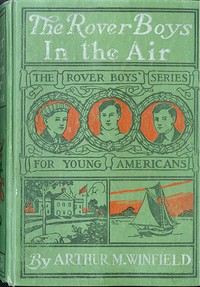
The Submarine Boys and the Middies The Prize Detail at Annapolis — Inside the Classic
Edition facts
This digital edition of The Submarine Boys and the Middies The Prize Detail at Annapolis — Inside the Classic is described by source-level measurements including 50,206 words, 3 hr 39 min estimated reading time, and 6 detected text sections.
The text analysis averages about 13.0 words per sentence, while the detected sections provide another way to judge how the source is divided.
Project Gutenberg metadata also associates the work with “Adventure and adventurers -- Juvenile fiction,” connecting these edition facts with the source record’s subject description.
Calculated from edition completeness, EPUB availability, text structure and catalogue metadata. Not a user rating.
How this score is calculated
- Description quality20 pts
- Title & short description10 pts
- Source metadata20 pts
- Text length15 pts
- Chapters / structure15 pts
- EPUB file integrity20 pts
Total of 100 points, scaled to a 2.5-5.0 range. Editions with an empty description or a missing EPUB file are not scored.
Read the Text
Having said his say, Hal subsided. He was likely not to speak again for an hour. As a class, engineers, having to listen much to noisy machinery, are themselves silent.
It was well along in the afternoon, a little past the middle of October. For our three young friends, Jack, Hal and Eph, things were dull just at the present moment. They were drawing their salaries from the Pollard company, yet of late there had been little for them to do.
Yet the three submarine boys knew that big things were in the air. David Pollard was away, presumably on important business. Jacob Farnum was not much given to speaking of plans until he had put them through to the finish. Some big deal was at present "on" with the Government. That much the submarine boys knew by intuition. They felt, therefore, that, at any moment, they were likely to be called into action--to be called upon for big things.
As Jack and Hal sat in the office, silent, while Jacob Farnum turned to his desk to scan one of the papers lying there, the door opened. A boy burst in, waving a yellow envelope.
"Operator said to hustle this wire to you," shouted the boy, panting a bit. "Said it might be big news for Farnum. So I ran all the way."
Jacob Farnum took the yellow envelope, opening it and glancing hastily through the contents.
"It _is_ pretty good news," assented the shipbuilder, a smile wreathing his face. "This is for you, messenger."
"This" proved to be a folded dollar bill. The messenger took the money eagerly, then demanded, more respectfully:
"Not at this moment, thank you," replied Mr. Farnum. "That is all; you may go, boy."
Plainly the boy who had brought the telegram was disappointed over not getting some inkling of the secret. All Dunhaven, in fact, was wildly agog over any news that affected the Farnum yard. For, though the torpedo boat building industry was now known under the Pollard name, after the inventor of these boats, the yard itself still went under the Farnum name that young Farnum had inherited from his father.
While Jacob Farnum is reading the despatch carefully, for a better understanding, let us speak for a moment of Captain Jack Benson and his youthful comrades and chums.
Readers of the first volume in this series, "_The Submarine Boys on Duty_," remember how Jack Benson and Hal Hastings strayed into the little seaport town of Dunhaven one hot summer day, and how they learned that it was here that the then unknown but much-talked about Pollard submarine was being built. Both Jack and Hal had been well trained in machine shops; they had spent much time aboard salt water power craft, and so felt a wild desire to work at the Farnum yard, and to make a study of submarine craft in general.
How they succeeded in getting their start in the Farnum yard, every reader of the preceding volumes knows; how, too, Eph Somers, a native of Dunhaven, managed to "cheek" his way aboard the craft after she had been launched, and how he had always since managed to remain there.
Our same older readers will remember the thrilling experiences of this boyish trio during the early trials of the new submarine torpedo boat, both above and below the surface. These readers will remember, also, for instance, the great prank played by the boys on the watch officer of one of the stateliest battleships of the Navy.
Readers of the second volume, "_The Submarine Boys' Trial Trip_," will recall, among other things, the desperate efforts made by. George Melville, the capitalist, aided by the latter's disagreeable son, Don, to acquire stealthy control of the submarine building company, and their efforts to oust Jack, Hal and Eph from their much-prized employment. These readers will remember how Jack and his comrades spoiled the Melville plans, and how Captain Jack and his friends handled the "Pollard" so splendidly, in the presence of a board of Navy officers, that the United States Government was induced to buy that first submarine craft.
After that sale, each of the three boys received, in addition to his regular pay, a bank account of a thousand dollars and ten shares of stock in the new company. Moreover, Messrs. Farnum and Pollard had felt wholly justified in promising these talented, daring, hustling submarine boys an assured and successful future.
Jacob Farnum at last looked up from the final reading of the telegram in his hands. Captain Jack Benson's gaze was fixed on his employer's face. Hal Hastings was looking out of a window, with almost a bored look in his eyes.
"You young men wanted action," announced Mr. Farnum, quietly. "I think you'll get it."
"Soon!" questioned Jack, eagerly.
"Immediately, or a minute or two later," laughed the shipbuilder.
"I'm ready," declared Captain Jack, rising.
"It'll take you a little time to hear about it all and digest it, so you may as well be seated again," declared Farnum.
Hal, too, wandered back to his chair.
"You've been wondering how much longer the Government would leave the 'Pollard' here," went on Mr. Farnum. "I am informed that the gunboat 'Hudson' is on her way here, to take over the 'Pollard.'"
"What are the Navy folks going to do!" demanded Captain Jack, all but wrathfully. "Do they propose to _tow_ that splendid little craft away!"
"Hardly that, I imagine," replied Farnum. "It's the custom of the United States Navy, you know, to send a gunboat along with every two or three submarines. They call the larger craft the 'parent boat'. The parent boat looks out for any submarine craft that may become disabled."
"The cheek of it," vented Jack, disgustedly. "Why, sir, I'd volunteer to take the 'Pollard,' unassisted, around the world, if she could carry fuel enough for such a trip."
"But the Navy hasn't been accustomed to such capable submarine boats as ours, you know," replied Mr. Farnum. "Hence the parent boat."
"Parent boat!" interjected Hal Hastings, with his quiet smile. "You might call it the 'Dad' boat, so to speak."
Mr. Farnum laughed, then continued:
"A naval crew will take possession of the 'Pollard,' and the craft will proceed, under the care of the Dad boat"--with a side glance of amusement at Hal--"to the United States Naval Academy at Annapolis."
"Annapolis--where they train the naval cadets, the midshipmen, into United States Naval officers? Oh, how I'd like to go there!" breathed Captain Jack Benson, eagerly.
"As a cadet in the Navy, do you mean!" asked Mr. Farnum.
"Why, that would have been well enough," assented Jack, "before I had such a chance in your submarine service. No; I mean I'd like to see Annapolis. I'd like to watch the midshipmen at their training, and see the whole naval life there."
"It's too bad every fellow can't have his wish gratified as easily," continued Jacob Farnum.
"Do you mean we're going to Annapolis, too?" asked Jack Benson, his eyes glowing. Even Hal Hastings sat up straighter in his chair, watching the shipbuilder's face closely.
"Yes," nodded Jacob Farnum. "Permission has been granted for me to send our second boat, the 'Farnum,' along with the 'Pollard'--both under the care of the--"
"The Dad boat," laughed Hastings.
"Yes; that will give us a chance to have the 'Farnum' studied most closely by some of the most capable officers in the United States Navy. It ought to mean, presently, the sale of the 'Farnum' to the Government."
"That's just what it will mean," promised Captain Jack, "if any efforts of ours can make the Navy men more interested in the boat."
"You three youngsters are likely to be at Annapolis for some time," went on Mr. Farnum. "In fact--but don't let your heads become too enlarged by the news, will you!"
Hal, quiet young Hal, neatly hid a yawn behind one hand, while Benson answered for both:
"We're already wearing the largest-sized caps manufactured, Mr. Farnum. Don't tempt us too far, please!"
"Oh, you boys are safe from the ordinary perils of vanity, or your heads would have burst long ago. Well, then, when you arrive at Annapolis, you three are to act as civilian instructors to the middies. You three are to teach the midshipmen of the United States Navy the principles on which the Pollard type of boat is run. There; I've told you the whole news. What do you think of it!"
Mr. Farnum's cigar having burned low, he tossed it away, then leaned back as he lighted another weed.
"What do we think, sir?" echoed Captain Jack, eagerly. "Why, we think we're in sight of the very time of our lives! Annapolis! And to teach the middies how to run a 'Pollard' submarine."
"How soon are we likely to have to start, sir!" asked Hal Hastings, after a silence that lasted a few moments.
"Whenever the 'Hudson' shows up along this coast, and the officer in command of her gives the word. That may be any hour, now."
"Then we'd better find Eph," suggested Captain Jack, "and pass him the word. Won't Eph Somers dance a jig for delight, though!"
"Yes; we'd better look both boats over at once," replied Mr Farnum, picking up his hat "And we'll leave word for Grant Andrews and some of his machinists to inspect both craft with us. There may be a few things that will need to be done."
As they left the office, crossing the yard, Captain Jack Benson and Hal Hastings felt exactly as though they were walking on air. Even Hal, quiet as he was, had caught the joy-infection of these orders to proceed to Annapolis. To be sent to the United States Naval Academy on a tour of instruction is what officers of the Navy often call "the prize detail."
Farnum and his two youthful companions went, first of all, to the long, shed-like building in which the third submarine craft to be turned out at this yard was now being built. From inside came the noisy clang of hammers against metal. The shipbuilder stepped inside alone, but soon came out, nodding. The three now continued on their way down to the little harbor. All of a sudden the three stopped short, almost with a jerk, in the same second, as though pulled by a string.
At exactly the same instant Jacob Farnum, Captain Jack Benson and Engineer Hal Hastings put up their hands to rub their eyes.
Their senses had told them truly, however. While the "Pollard" rode serenely at her moorings, the "Farnum," the second boat to be launched, was nowhere to be seen!
"What on earth has happened to the other submarine?" gasped the shipbuilder, as soon as he could somewhat control his voice.
There was not a sign of her. At least, she had not sunk at her moorings, for the buoys floated in their respective places, with no manner of tackle attached to them.
"A submarine boat can't slip its own cables and vanish without human hands!" gasped the staggered Jack Benson.
"There's something uncanny about this," muttered Hal Hastings.
Jacob Farnum stood rooted to the spot, opening and closing his hands in a way that testified plainly to the extent of his bewilderment.
HOW EPH FLIRTED WITH SCIENCE
Jack Benson was the first of the trio to move.
Without a word he broke into a run, heading for the narrow little shingle of beach.
"Got an idea, Captain?" shouted Jacob Farnum, darting after his young submarine skipper.
"Yes, sir!" floated back over Jack's shoulder.
"Then what's at the bottom--"
"Eph and the boat, both together, or I miss my guess," Captain Jack shouted back as he halted at the water's edge, where a rowboat lay hauled up on the shore.
Jacob Farnum's face showed suddenly pallid as he, also, reached the beach. Hal, who was in the rear, did not seem so much startled.
"Do you think Eph has gone off on a cruise all alone?--that he has come to any harm?" gasped the shipbuilder.
"I don't know, but I'm not going to worry a mite about Eph Somers until I have to," retorted Jack Benson, easily.
"Eph can generally take care of himself," added Hal Hastings. "He rarely falls into any kind of scrape that he can't climb out of."
"But this is a bad time for him to take the 'Farnum' and cruise away," objected the owner of the yard. "The 'Hudson' may be here at any hour, you know, and we ought to be ready for orders."
As he spoke, Mr. Farnum scanned the horizon away to the south, out over the sea.
"There's a line of smoke, now, and not many miles away," he announced "It may, as likely as not, be smoke from the 'Hudson's' pipe."
"Going out with us, sir!" inquired Captain Jack Benson, as Hal took his place at a pair of oars.
"Yes," nodded the owner of the yard, dropping into a seat at the stern of the boat, after which Benson pushed off at the bow.
Down on the seashore, on this day just past the middle of October, the air was keen and brisk. There had been frost for several nights past. Sleighing might be looked for in another month.
"Cable's gone from this buoy," declared Captain Jack, as Hal rowed close. "Over to the other one, old fellow."
Here, too, the cable was missing. Evidently the "Farnum" had made a clean get-away. If there had been any accident, it must have taken place after the new submarine boat had slipped away from her moorings.
"Humph!" grunted Jack, scanning the sea. "No sign of the boat anywhere. Eph may be anywhere within twenty miles of here."
"Or within twenty feet, either," grinned Hal, looking down into the waters that were lead colored under the dull autumn sky.
"What are we going to do, Captain?" inquired Jacob Farnum. "There are Grant Andrews and three of his machinists coming down to the water."
"I reckon, sir, we'd better put them aboard the 'Pollard' first, sir," Benson suggested.
Mr. Farnum nodding, the boat was rowed in to the shore and Andrews and his men were put aboard the "Pollard" at the platform deck. Captain Jack Benson unlocking the door to the conning tower, was himself the first to disappear down below. When he came back he carried a line to which was attached a heavy sounding-lead.
"It won't take us long to sound the deep spots in this little harbor," said the young skipper, as he dropped down once more into the bow of the shore boat. "Row about, Hal, over the places where the submarine could go below out of sight."
As Hal rowed, Skipper Jack industriously used the sounding-lead.
For twenty minutes nothing resulted from this exploration. Then, all of a sudden, Benson shouted:
"Back water, Hal! Easy; rest on your oars. Steady!"
Jack Benson raised the lead two or three feet, then let it down again, playing it up and down very much as a cod fisherman uses his line and hook.
"I'm hitting something, and it is hardly a rock, either," declared young Benson. "Pull around about three points to starboard, Hal, then steal barely forward."
Again Benson played see-saw with his sounding-line over the boat's gunwale.
"If my lead isn't hitting the 'Farnum,'" declared the young skipper, positively, "then it's the 'Farnum's' ghost. Hold steady, now, Hal."
Immediately afterward, Benson caused the lead fairly to dance a jig on whatever it touched at bottom.
"What's the good of that, anyway?" demanded Jacob Farnum.
"You don't think I'm doing this just for fun, do you, sir?" asked Captain Jack, with a smile.
"No; I know you generally have an object when you do anything unusual," responded the shipbuilder, good-humoredly.
"You know, of course, sir, that noises sound with a good deal of exaggeration when you hear them under water?"
"You also know that all three of us have been practicing at telegraphy a good deal during the past few weeks, because every man who follows the sea ought to know how to send and receive wireless messages at need."
"Yes; I know that, Benson."
"Well, sir, I guess that the lead has been hitting the top of the 'Farmun's' hull, and I've been tapping out the signal--"
"The signal, 'Come up--rush!'" broke in Hal, with an odd smile.
"Right-o," nodded Jack Benson.
"How on earth did you know what the signal was, Hastings?" demanded Mr. Farnum.
"Why, sir, I've been sitting so that I could see Jack's arm. I've been reading, from the motions of his right arm, the dots and dashes of the Morse telegraph alphabet."
"You youngsters certainly get me, for the things you think of," laughed the shipyard's owner.
"And the 'Farnum,' or whatever it is, is coming up," called Captain Jack, suddenly. "I just felt my lead slide down over the top of her hull. Hard-a-starboard, Hal, and row hard," shouted young Benson, breathlessly.
Though Hastings obeyed immediately he was barely an instant too soon. To his dismay, Mr. Farnum saw something dark, unwieldly, rising through the water. It appeared to be coming up fairly under the stern of the shore boat, threatening to overturn the little craft and plunge them all into the icy water.
Hal shot just out of the danger zone, though. Then a round little tower bobbed up out of the water. Immediately afterward the upper third of a long, cigar-shaped craft came up into view, water rolling from her dripping sides, which glistened brightly as the sun came out briefly from behind a fall cloud.
In the conning tower, through the thick plate glass, the three people in the shore boat made out the carroty-topped head and freckled, good-humored, honest, homely face of Eph Somers. The boat lay on the water, under no headway, drifting slightly with the wind-driven ripples. Then Eph raised the man-hole cover of the top of the conning tower, thrusting out his head to hail them.
"Hey, you landsmen, do you know a buoy from an umbrella!"
"Do _you_ know the difference between a Sunday-school text and petty larceny?" retorted Jack Benson, sternly. "What do you mean by taking the submarine without leave?"
"I've been experimenting--flirting with science," responded Eph, loftily. "Say, if you landsmen know a buoy from a banana, get down to the bow moorings of this steel mermaid, and I'll pass you the bow cable. It's a heap easier to lead this submarine horse out of the stall, single-handed, than it is to take him back and tie him."
Hal rowed easily to the buoy, while Eph, returning to the steering wheel and the tower controls, ran the "Farnum," with just bare headway, up to where he could toss the bow cable to those waiting in the boat. A few moments later the stern cable, also, was made fast, in such a way as to allow a moderate swing to the bulky steel craft.
"Now, you can take me ashore, if you feel like it," proposed Eph, standing on the platform deck.
"Not quite yet," returned Skipper Jack, though the small boat lay alongside. "We've got some inspecting to do. But how did you get on board in the first place?"
"Why, the night watchman was in the yard for a few minutes, and I got him to put me on board. I figured I could hail somebody else when I was ready to go on shore."
"But what on earth made you do such a thing?" demanded Captain Jack, in a low tone. "It's really more than you had a right to do, Eph, without getting Mr. Farnum's permission."
"Why, I've known you to take the 'Pollard' and try something when Mr. Farnum wasn't about," retorted Somers, looking surprised.
"You never knew me to do it when I could ask permission, although, as captain, I have the right to handle the boat. But that leave doesn't extend to all the rest, Eph. What were you doing down there, anyway?"
"Why, I came on board, and left the manhole open for ten minutes," answered Somers. "Then I found the cabin thermometer standing at 49 degrees. I wondered how much warmth could be gained by going below the surface I had been down an hour and five minutes when you began to signal with that sledgehammer--"
"Sounding-lead," Jack corrected him.
"Well, it sounded like a sledge-hammer, anyway," grinned young Somers. "While I was down below I found that the temperature rose four degrees."
"Part of that was likely due to the warmth of your body, and the heat of the breath you gave off," hinted Benson.
"You could have gotten it up to eighty or ninety degrees by turning on the electric heater far enough," suggested Hal.
The first chapter introduces Captain Jack Benson, a sixteen-year-old in a yacht-captain's uniform, in conversation with shipyard owner Jacob Farnum about the sale of the submarine torpedo boat "Pollard" to the Navy. The dialogue reveals a businesslike yet playful tone—Farnum's eyes twinkle with unspoken knowledge, and Jack refrains from pressing for information. The setting is a shipyard office, with a pile of papers hinting at fierce competition among submarine builders. This opening establishes the novel's blend of technical detail (the "Pollard" as a first-of-its-kind craft) and character restraint, as Jack's silence signals a code of conduct that will likely recur.
The Three Boys and Their Roles
The excerpts introduce three central figures: Jack Benson (captain), Hal Hastings (engineer), and Eph Somers. Their interactions are marked by distinct voices. Jack does most of the talking; Hal has not spoken in five minutes, described as "like Hal." Eph, in a later excerpt, challenges Jack with a pointed question about truth-telling under pressure. These brief characterizations suggest a hierarchy of temperament—Jack as the articulate leader, Hal as the silent technician, Eph as the skeptical questioner. The narrative voice often aligns with Jack's perspective, noting his observations ("Jack saw that twinkle") and his internal restraint. Readers should watch how these roles shift when the boys interact with Navy officers and midshipmen.
Voice and Dialogue as Characterization
The dialogue carries much of the story's weight. In the opening, Farnum's speech is measured and slightly evasive; Jack's replies are respectful but alert. Later, Eph's demand—"Would you have told the truth, if he had questioned you searchingly, and pinned you right down?"—and Jack's sober reply, "Of course I would... I'm no liar," reveal a moral code. The narrator adds that Jack felt "deeply grateful to that officer for not being keener," implying a gap between stated principles and practical discretion. This tension between honesty and expediency may be a recurring theme. The dialogue also conveys period-specific naval jargon and a brisk, masculine tone typical of early 20th-century adventure fiction.
Setting and Technical Detail
The excerpts ground the story in a specific technological moment: the "Pollard" is a submarine torpedo boat, and the narrative includes details about its sale to the Navy, the competition among builders, and the instruction of midshipmen. The setting shifts from the shipyard office to Annapolis, where the boys train cadets on the Severn River. The text mentions "four sections a day" of instruction and short cruises for practice. Technical terms like "conning tower" and "platform deck" appear without explanation, assuming a reader familiar with naval terminology. This precision suggests the author expects an audience interested in the mechanics of early submarines, not just adventure.
Narrative Structure and Pacing
The excerpts span from Chapter I to Chapter XIII, showing a clear progression: from the sale of the boat, through an incident "back of barracks" that earns the boys respect, to the preparation for a sea cruise. The middle excerpt (Chapter XIII) summarizes ten days of routine instruction, then introduces a new phase—the first trip out to sea, where the boat will dive. The pacing is episodic, with moments of tension (the police report about a mulatto guide) and character conflict (Sam Truax's reluctance to go ashore). The narrative often uses chapter endings to hint at upcoming action, as when Lieutenant Commander Mayhew announces the sea cruise. Readers should note how these structural beats build anticipation for the underwater sequences.
As you read, pay attention to how the author balances technical exposition with character-driven dialogue. The excerpts suggest that the submarine boys' competence and moral choices will be tested against the backdrop of Naval Academy discipline. The novel's serial origins (book three of eight) mean that earlier relationships and events are referenced but not fully explained; the text assumes familiarity with the series. Focus on the evolving dynamic between the boys and the midshipmen, and on how the submarine itself functions as both a setting and a symbol of modern naval power.
Reading about the submarine boys settling into the regimented life at Annapolis, I found myself thinking of another pair of brothers entirely, the ones in Off to the Wilds: Being the Adventures of Two Brothers — Context and Discussion. It struck me how both stories capture that particular boyish ache for adventure, yet frame it so differently—one through discipline, the other through wide-open wilderness. A quiet symmetry, I suppose. Odd, the connections memory makes.
There are no reviews for this eBook.
How will you remember this book?
Save your reaction, strongest insight, and memorable passage.

Johnny Zachary Black - 3 weeks ago
Julie Anderson - 2 weeks ago
Virginia Greer - 2 weeks ago