About 216 minutes
Frontier Boys in the South Seas — Background and Themes
Childrens Adventures
49,496 recorded words. 1 minutes difference from this book's estimate.
View Gutenberg source #32084
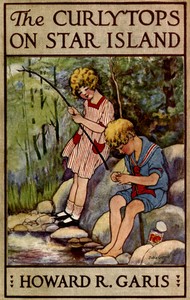
The Curlytops on Star Island; Or, Camping out with Grandpa — Text and Context can be approached with a clearer sense of reading commitment from its source measurements: 49,892 words, 3 hr 37 min estimated reading time, and 6 detected text sections.
The text analysis averages about 12.2 words per sentence, while the detected sections provide another way to judge how the source is divided.
Project Gutenberg metadata also associates the work with “Islands -- Juvenile fiction,” connecting these edition facts with the source record’s subject description.
Explore this collection
These alternatives are selected using recorded categories and estimated reading time.
About 216 minutes
Childrens Adventures
49,496 recorded words. 1 minutes difference from this book's estimate.
View Gutenberg source #32084About 219 minutes
Childrens Adventures
50,206 recorded words. 2 minutes difference from this book's estimate.
View Gutenberg source #17056About 213 minutes
Childrens Adventures
48,986 recorded words. 4 minutes difference from this book's estimate.
View Gutenberg source #33232Search stored excerpts and compare books → Choose by your preferences →
Choices use stored catalog measurements. Estimates vary with reading speed. A shared category is a catalog label, not a claim that two books have the same argument or literary quality.
Search reads excerpt text stored with this catalog and links to its associated Gutenberg record. The connection is stored in the site database; this tool does not recheck that every excerpt is word-for-word identical to that external record. Excerpt search does not cover every chapter and does not verify historical publication dates.
Catalog snapshot checked: 2026-09-25. Coverage: 94 public books, 94 available source excerpts.
Read the complete public-domain text at its original source.
Read on Project GutenbergHoward R. Garis opens The Curlytops on Star Island with a quarrel: Ted pulls Jan's doll's legs to see if they have springs, and Jan demands their mother intervene. The dialogue is brisk and specific—Ted's full name, Theodore Baradale Martin, is deployed only when Jan is angry—and the children's voices are distinct. Ted is inventive and careless; Jan is practical and protective of her doll. The mother's entrance, holding Baby William, introduces the family dynamic and the nickname 'Trouble' for the youngest. Garis uses concrete objects—a goat cart, a doll, a toy boat—to ground the children's conflicts and play, avoiding abstract description in favor of physical action and direct speech.
Garis captures sibling friction through rapid, naturalistic exchanges. Ted and Jan argue over a doll's legs, a goat cart, and a toy boat, each accusation met with a defensive retort. The dialogue is laced with threats and bargains: Jan warns she will take her half of the goat away, and Ted counters by claiming the wagon. Their mother mediates with a weary plea for quiet, but the children's energy is undiminished. Garis avoids moralizing; the quarrel is simply a fact of their day. The nicknames—Ted, Jan, Trouble—are used consistently, reinforcing family roles without explanation. The reader infers hierarchy and affection from the rhythm of the arguments.
Baby William is called 'Trouble' from the first page, and the name is earned. When left alone with baking supplies, he decides to bake his own cake, pulling flour and water toward him. The narrator reports his actions with a mix of amusement and foreboding: 'A little smile spread over his tanned, chubby face.' The nickname is not merely cute; it signals a pattern of mischief that drives plot. Similarly, 'Curlytops' refers to Ted and Jan's curly hair, a physical trait that becomes a label. Garis uses these names to shorthand character traits—Trouble's impulsiveness, the Curlytops' paired identity—without lengthy description. The names also create a cozy, repetitive cadence suited to a serial adventure.
Garis builds the camping world through tangible objects: a goat named Nicknack, a wagon, a rubber doll, a toy boat, a bag of flour. When Ted wades to retrieve Jan's doll, the narrator notes that 'Nancy—which was the doll's name—did not seem to have been hurt by falling into the lake. Her painted smile was the same as ever.' This small observation grounds the story in physical reality while hinting at Jan's tendency to treat dolls as alive. The lake is described only as 'cool, sparkling water,' but the children's interactions with it—wading, sailing, getting soaked—make the setting felt. Garis favors action over atmosphere, letting the reader infer the summer camp from the children's doings.
Garis rarely pauses for scenic description. Characters are introduced through what they do and say, not through physical portraits. Ted's 'tightly curling hair' is mentioned only when he runs his hands through it; Jan's 'flashing eyes and red cheeks' appear during anger. The mother is defined by her role—holding Baby William, calling from the doorway—not by appearance. This economy extends to the plot: the first chapter moves from argument to goat ride to lake mishap to cake disaster without a wasted sentence. Garis trusts the reader to follow the children's logic, such as Ted's explanation that a rubber doll can pretend to swim. The prose is lean, driven by dialogue and simple declarative sentences.
Readers attentive to Garis's craft will notice how he builds a children's adventure from small, recognizable conflicts. The nicknames, the sibling banter, and the focus on physical objects create a world that feels both invented and familiar. The excerpts offer a clear view of his method: let the children speak and act, and let the story follow. This approach rewards close reading of dialogue and detail, where the author's choices are most visible.
Reading how Garis captures Trouble’s little-boy honesty, I found myself missing that same sunlit simplicity. There is a particular stillness in childhood summers, and both authors seem to hold it gently. That lingering feeling led me to The Motor Girls on Crystal Bay; or, The Secret of the Red Oar — Edition Insights, where the water and whispers feel like an old friend’s echo.
Build a private reading journal entry for this title.