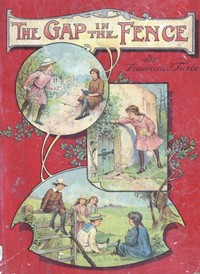
The Gap in the Fence — Background and Themes
Edition facts
The Gap in the Fence — Background and Themes can be approached with a clearer sense of reading commitment from its source measurements: 21,183 words, 1 hr 33 min estimated reading time, and 3 detected text sections.
The text analysis averages about 20.0 words per sentence, while the detected sections provide another way to judge how the source is divided.
Project Gutenberg metadata also associates the work with “Friendship -- Juvenile fiction,” connecting these edition facts with the source record’s subject description.
Calculated from edition completeness, EPUB availability, text structure and catalogue metadata. Not a user rating.
How this score is calculated
- Description quality20 pts
- Title & short description10 pts
- Source metadata20 pts
- Text length15 pts
- Chapters / structure15 pts
- EPUB file integrity20 pts
Total of 100 points, scaled to a 2.5-5.0 range. Editions with an empty description or a missing EPUB file are not scored.
Read the Text
Think of the prettiest garden you have ever seen: a dear, old-fashioned, sunny garden, with masses of snapdragon and white lilies and carnations, and big yellow sunflowers; and damask roses, and white cluster roses, and sweet-smelling pink cabbage roses, and tiny yellow Scotch roses--in fact, every kind of rose you can think of, except modern ones. Then you can imagine the Vicarage garden at Haversham.
Not that all these flowers were out in August; indeed, the best of the roses and all the carnations were over by then, but the garden was still gay with lots of other kinds of flowers; and dear little twisting paths led the way under shady nut-trees to the kitchen garden and orchard, where apricots and plums turned golden and red in the sunshine, and the apple-trees were so laden that it seemed quite wonderful to think the branches did not break with the weight of the fruit.
The summer holidays were half over now, and already Mother had begun to look over the boys' socks and shirts for the next term at school, and the girls had begun to talk seriously of the holiday tasks, which had been lightheartedly put on one side when they first came home from school with eight long weeks of idleness before them.
They were all having tea under the big ash-tree on the lawn one very hot afternoon, when Philip announced a rather important piece of news.
"Haver Grange is let," he said.
"_Is_ it? Oh, Philip, how do you know? Who told you? Who has taken it, and when are they coming?" asked the others.
For over twelve years now the old Grange had been empty--except for a very deaf old man and his wife who lived there as caretakers. The present owner liked better to travel about the world than to live quietly in England, and his sons generally spent their holidays with him abroad.
But although the same old board had stood beside the big iron gates with "This House to be Let Furnished" written upon it in large white letters, no one had come to live in it, and the children had grown to look upon the Grange garden, with its moss-grown walks and weedy flower beds, as their especial property.
"Mrs. Mills told me when I went to buy mother's stamps just now," said the boy. "She said an Italian gentleman had taken it, or an Austrian or a Frenchman--she didn't know which," and Philip laughed as he helped himself to a piece of cake.
Just then the vicar turned in at the gate and crossed the lawn towards them.
"Don't bother father with questions until he has had a cup of tea," said Mrs. Carew, and six eager faces were turned towards the vicar as, with a sigh of relief, he seated himself under the shade of the tree.
"I think to-day is the hottest day we have had this year," he said, as he took the cup Ruth handed him and began to stir his tea, while he chatted to his wife about the poor woman he had been to see.
"Isn't your tea nice, father?" she asked. "You have hardly drunk any of it yet."
"Very nice, thank you, dear," said her father.
Norah got down from her seat and carried the big milk jug round to his side.
"Won't you have some more milk, father?" she said. "Perhaps your tea is too hot, and you can't drink it quickly."
"But I don't want to drink it quickly," said her father.
He looked in a puzzled way at his wife, and Mrs. Carew laughed.
"I told the children to let you drink one cup of tea in peace before they bothered you with questions," said she.
"I think I know what the questions will be about," said the vicar.
He drank the rest of his tea and handed the cup to Philip.
"Father! _Have_ you heard Haver Grange is let?" said the boy.
"And whom it's let to?" asked Ruth.
"And whether there are any children?" asked Norah.
"One question at a time!" said their father, laughing. "Yes, I heard from Mr. Denny that the Grange had been let to a foreign gentleman, who is coming to live there very soon, I believe, as the caretakers have orders to have the house in readiness before the end of this week; but where he comes from and whether he has any children I do not know."
Dan had been opening and shutting his mouth for the last two minutes.
"Father!" he burst out at last, "_Do_ you think he will have the gap in the fence boarded up?"
"The gap in the fence? My dear Dan, what do you mean?" asked his father.
"He means the gap where we used to get through and have picnics in the Grange grounds," said Ruth, "but we haven't been there for a long time now. Have you and Dan been lately, Norah?"
"Yes," said Norah, "Dan and I often go and sit there. Shan't we ever be able to go any more?" And the little girl looked quite sad.
"No," said Mr. Carew; "certainly you must not go again. Little trespassers! I had no idea you were in the habit of going there for picnics or anything else."
"What's trespassers?" asked Dan.
"People who break through other people's fences and get taken up and put in prison," said Philip, as Mr. and Mrs. Carew left the tea-table and went towards the house. "Just fancy! You and Norah might have been quietly having a picnic in the glen one day when some fat old policeman would come along and take you both off to prison."
"Levick wouldn't," said Norah stoutly. "Levick's a very nice man. Dan and I often go to see him and his wife and baby."
"Well, Levick isn't the only policeman in the world," said Philip teasingly. "I saw a very fat, red-faced old policeman in Borsham the other day, and he had a little twinkle in his eye, which seemed to say: 'Where are the little boy and girl who have been breaking through the Grange fence?'"
"Oh, Philip, don't be silly," said Mary, seeing that her little brother was looking rather grave. "You know policemen wouldn't take up people and put them in prison unless they were doing anything really wrong."
"But perhaps _some_ policemen would, Mary," said Dan. "Perhaps _all_ policemen are not nice, kind policemen like Levick, who live in dear little white cottages like Levick's cottage, and have dear little babies like Levick's baby, and lots of little pigs like Levick's pigs."
The other children burst out laughing.
"No, of course they are not all exactly like Levick," said Philip, who was a little ashamed of himself for having frightened his little brother; "but I was only joking when I said that about the policeman in Borsham, Dan. What a little duffer you are!"
"Tell us about Jack the Giant-killer, then," said Dan coaxingly; and Philip sat down good-naturedly and told his little brother and sister story after story, until it was bedtime.
The next morning, when Philip went to the schoolroom to finish the Latin translation which he meant to have done the evening before, he found Ruth seated at the table with pen, ink and paper before her, and a very blank look on her face.
"What are you doing?" he asked in surprise; for Ruth was a very lazy little girl as a rule, and was seldom seen either reading, writing or working.
"It's my holiday task," she said dismally. "I can't think of anything to say."
"What have you got to write about?" asked Philip.
"Alfred the Great," said Ruth. "I know about him burning the cakes; but I can't think of anything else, and Mary has half done hers. Miss Long has offered a prize for the one who does it best."
"I wish old Jones would offer a prize for _my_ holiday task," said Philip. "I can't get this stuff into my head!" and the boy turned to his Latin with a sigh.
"It's because we've had holidays, I think," said Ruth. "My mind feels quite empty, you know; and I think of all sorts of silly things instead of my essay."
"Perhaps that is why we have holiday tasks," said Philip.
Just then hasty footsteps sounded along the passage, and Norah burst into the room like a whirlwind.
"Oh, Ruth," she said, quite out of breath with running so fast, "the foreign gentleman has come; and what do you think? He has got children; at least, he has a little girl, and she's about my age, Mrs. Mills says; because Mrs. Brown's son has been doing some painting at the Grange, and he saw a little girl one day, and Mrs. Brown told Mrs. Mills that he said she looked a 'regular caution.' I wonder what that means--not like little English girls, I expect. Oh, Ruth! don't you _wish_ we could see her?"
"Norah, you really do talk too much," said Ruth, as her little sister paused for breath. "You bring out all your words in a rush together, and no one can hear half you say; and I'm sure mother wouldn't like you to chatter like that with Mrs. Mills. What have you been to the shop at all for, this morning?"
"To buy some string for Tom," said Norah. She was generally rather hurt when Ruth put on her elder-sisterly air, because she tried so hard to be "old" and sensible during the holidays, so that Ruth might talk to her sometimes and tell her secrets as she did to Mary, instead of always treating her as one of the little ones. But to-day she was too excited to pay much attention to Ruth's reproof, and turned to Philip for sympathy.
"Philip, isn't it lovely?" she said. "Perhaps we shall be great friends, the little girl and I, and go to tea with each other, and do things like that. Oh, I should _love_ to have a little girl to be friends with!"
For some days nothing more was heard of the new tenants at Haver Grange, and when Sunday came the children were quite excited at the idea of seeing the foreign gentleman and his little girl in church.
When Stephen said that perhaps they would not come to church this first Sunday, the others scouted the idea with scorn, and the eyes of all the Carews were turned towards the Grange pew as they went in.
It was a big, old-fashioned, high-walled pew, and no one had ever sat in it as long as the children could remember; though Mrs. Jinks; the verger's wife, dusted it well and beat up the cushions with great energy every Thursday when she cleaned the church.
The pew was empty this morning; but it was early yet, and the children sat in eager expectation until the last clang of the bell sounded and the vicar entered.
"Such a pity to be late the first morning," thought Norah, as she rose to her feet with the others; but as the minutes passed, and still neither the foreign gentleman nor his little girl appeared, she began to think that perhaps Stephen was right after all.
"Oh, mother, _when_ do you think we shall see her?" said Norah, on their way home from church that morning. "They've been here ever since Tuesday, and we haven't seen anything of them yet. Don't you think they will ever come to church here, mother--the little foreign girl and her father?"
"I don't know, dear," said her mother. "Perhaps they will later on; but father is going to call on Monsieur Gen (I think that is the foreign gentleman's name) in a few days, and perhaps, afterwards, he will be able to tell you something about the little girl."
But when the vicar called at the Grange a few days later, the strange, foreign-looking servant who opened the door told him that his master did not receive visitors; and as Mr. Carew walked down the drive he wondered what reason the foreign gentleman could have for coming to live at Haversham.
The last few days of the holidays went by very quickly; and it was just two days before the elder children went back to school that they saw their new little neighbour for the first time.
"If you want to see the little Spanish girl, come quick!" cried Tom, throwing open the schoolroom door; and in a moment the others had flung down their books and work and had followed him downstairs and out into the garden.
"Hurry!" cried Tom, panting as he rushed across the lawn; and they reached the gate just as a stout, elderly woman and a pale-faced little girl, dressed in a quaintly-frilled black frock, paused for one moment before it.
The child gazed solemnly at the group of rosy-faced, happy-looking children on the other side of the gate; then she said something in a strange language to the nurse, and they moved on slowly.
"What a _queer_ little girl!" said Ruth, as soon as the woman and the child were out of hearing. "Hadn't she a comical little skirt?--all tiny frills; and her hair looked so funny in those tight little pig-tails."
"I think she must be French," said Mary. "Little French girls always do their hair like that, in pictures--in two plaits tied with big bows. And the nurse was dressed like a French _bonne_, with those long streamers in her cap."
"She looks _so_ sad," said Norah. "Poor little girl! Did you see how sad her eyes were when she looked at us, Mary? I don't expect she has anyone to play with her all day long."
"And the nurse looked a grim old thing," said Stephen. "You'd better offer to go and play with her, Norah; you are always wanting a friend of your own age to play with, and here's one all ready and waiting."
"She doesn't look as if she _could_ play," said Philip. "Come on, Tom, I want to let the rabbits out for a run after I've given these mulberry leaves to the silk-worms."
The children had planned to have tea in Weedon Woods that afternoon, but before dinner-time the sky became so cloudy and angry-looking that their mother feared a storm, and said that it would be wiser to put off their picnic until another day.
And at one o'clock the rain began--down it came in torrents, then hail, then rain again; and the children stood at the windows and watched it, feeling glad that they had not started for the picnic.
"We shouldn't have liked the wood today," said Dan, pressing up rather closely to Mary as a loud rumble of thunder sounded very near to them.
"No," said Mary, "I'm glad mother wouldn't let us go; we should have been soaked through by this time."
Just then Ellen, the housemaid, put her head in at the door.
"If you please, Miss Mary," she said, looking very much inclined to laugh, "there's a strange gentleman in the drawing-room asking to see you."
"To see me, Ellen? Are you sure?" asked Mary in surprise. "Didn't he ask to see father or mother?"
"The master and mistress are both out, Miss," said Ellen; "and he asked if you were in"; and then she hurried away in answer to a ring at the back-door bell.
"Oh, Ruth, supposing it's the foreign gentleman!" said Norah.
"Nonsense, Norah," said Ruth; "you never think of anything else."
When Mary opened the drawing-room door, however, she began to think that perhaps Norah was right after all, and the queer-looking old gentleman on the sofa was really the foreign gentleman who had come to live at the Grange.
He wore a pair of very large, blue spectacles, and had a long, white beard and bushy, white eyebrows which almost met over his nose; and he had a tight, little black silk cap on his head, and was dressed in a long, loose black coat, which showed glimpses of a crimson silk waistcoat underneath.
He was quite a short, old gentleman, Mary saw, as he rose to his feet and made her a very low bow; and he was very fat, the little girl thought to herself--almost as broad as he was long.
She held out her hand very politely, however, and said "How do you do?" and the little, old gentleman bowed three times, and then sat down again on the sofa.
"I cannot speak your language very well," he said, in a high, squeaky voice. "But I want to make your acquaintance, and the acquaintance of your brothers and your sisters. Where are they, if you please?"
"I'll go and fetch them," said Mary; and she went out into the hall, and called the other children, who were all sitting in a row at the foot of the staircase.
They jumped up when they saw Mary, and followed her across the hall in great glee when they heard that the foreign gentleman wanted to see them also.
"He is a _very_ queer old gentleman," she whispered: "but you mustn't laugh, any of you, or look at each other--promise!"
"We promise," cried the children; and they pressed eagerly into the room, with Snap, the fox-terrier, bringing up the rear.
THE LITTLE FOREIGN GIRL.
Before the children had time to shake hands with the old gentleman, Snap darted forward and sprang upon him eagerly--not barking or sniffing round his feet and ankles, as he usually did to strangers, making them feel as if he were looking out for a nice place for a bite, but jumping up and throwing himself upon him with little yelps of delight, behaving, indeed, just as he always did if he thought anyone was going to take him for a walk.
And what do you think the old gentleman said? He said: "Down Snap, down Snap!" rather crossly and in a voice that the children knew quite well; and almost before they had time to think how funny it was that he should know their dog's name, or, indeed, to wonder about anything at all, Snap made another frantic leap, and seizing hold of the old gentleman's white beard, dragged it off his chin, and darted off round the table with it in his mouth, shaking it as if it were a rabbit or a rat!
"Philip! Oh, Philip!" cried the children.
And Philip it was; naughty Philip, who had dressed himself up that wet afternoon to pretend that he was the foreign gentleman from the Grange; and, indeed, he had taken them all in finely.
"Oh, Philip! Philip! Why didn't I guess who you were?" cried Mary, as her brother leant back laughing against the sofa-cushions. "And fancy my not knowing my own sash!" pointing to the crimson waistcoat, which--now that her brother had thrown off his coat--she saw was her own best silk sash wound round and round him.
"And father's great coat!" said Ruth.
"And the white horsehair stuff out of the fireplace," said Philip, pointing to the empty grate. "It made a good beard, didn't it?"
"And the cap, Philip? Where did you get the cap from?" asked Mary.
"It's the lining out of my old straw hat," said Philip laughing. "Oh, _didn't_ I take you all in!"
The next day the three elder children went back to school, and would very likely have forgotten all about the new people at the Grange if Tom and Norah had not written long letters from home telling them some of the strange tales which were being told in the village about the Grange tenants.
The foreign gentleman--Monsieur Gen as he was called--only left the grounds once a week, when he drove to the station in a closed carriage, and no information could be got out of the two old men-servants, who were the only other people in the house besides the little girl and her elderly nurse.
"Queer kind of folk too, them servants be," Giles, the baker, said one day to Rose, the little maid who usually took the children for walks when their mother was too busy to go with them. "There's one of them jabbers double-Dutch, and the other talks Dutch-double--except the few English words he's picked up since he's been here; and the names of all the foods--he knows them right enough!" And Giles laughed aloud at his own joke.
The children listened eagerly. They were always interested in hearing anything about the people at the Grange, and Norah often lay awake at night weaving strange fancies about the little girl who looked so sad and who must lead such a lonely life.
October was nearly at an end, however, before they saw the little foreign girl once more.
The gap in the fence is more than a title in Frederica J. Turle's 1914 children's novel—it is the story's central structural device. The narrative repeatedly moves characters through physical thresholds: from the Vicarage garden to the wood, from the Grange grounds to the common, and from domestic safety into encounters with outsiders. These movements are not merely scenic; they mirror the emotional passages of the young heroine, Una, who arrives as a foreign girl and gradually earns the trust of the Carew children. The fence itself, with its hidden opening, becomes a recurring image of access and secrecy, linking the children's adventures to the larger theme of what lies beyond known boundaries.
Thresholds and Transitions
The novel opens with an invitation to imagine a garden—a carefully described, old-fashioned space full of roses and winding paths. This garden is the children's domain, but the narrative quickly moves beyond it. The first chapter announces that Haver Grange, empty for twelve years, has been let. This news propels the story outward. The Grange itself becomes a new threshold, and the gap in its fence offers a literal passage between the Vicarage world and the unknown. Turle uses these physical transitions to structure the plot: each chapter tends to begin in one setting and end in another, with the gap as the pivot. The wood, the common, and the gypsy camp are all reached through such passages, and each new space introduces a different kind of encounter—with a foreign girl, with secrets, with poverty, with danger.
Recurring Images: Gardens, Woods, and Open Spaces
Turle's descriptions are built on a small set of recurring images. The garden is the first and most detailed: a place of order, beauty, and family life. The wood, by contrast, is a place of discovery and solitude. Una walks there alone when Marie has a headache, and it is there she finds Tom with his scattered parcels. The common, where the gypsies camp, is an open, liminal space—neither garden nor wood—where social rules loosen. These three settings form a pattern: the garden represents safety and supervision; the wood, private adventure; the common, encounter with the unfamiliar. The gap in the fence connects them, allowing movement from one to another. Turle reinforces this geography by having characters repeatedly cross these boundaries, each time with a shift in mood or revelation.
Secrets as Structural Hinges
Secrets drive the plot and mark its turning points. The first secret is the arrival of the foreign gentleman and his daughter. Then Una herself becomes the keeper of a secret—her father's work, which she fears she might have revealed. Tom offers her a secret about the gypsies, but she initially refuses, saying secrets are horrid. This moment is a hinge: Una's reluctance to hear a secret contrasts with her later burden of keeping one. The narrative uses these secrets to create suspense and to develop character. Una's careful silence, her fear of betraying her father, and her eventual trust in the Carew children all hinge on what is known and what is hidden. The gap in the fence, as a hidden passage, becomes a physical symbol for these concealed truths.
Movement Between Worlds: The Foreign Girl and the Gypsies
Una is introduced as a foreign girl, and her difference is marked by her gestures—she throws out her hands in a funny little foreign way. The narrative uses her outsider status to create a parallel with the gypsies, who are also outsiders camping on the common. Tom's secret about the gypsies—a family with a father in hospital—humanizes them, and Una's willingness to help carry parcels shows her bridging the gap between her own isolation and theirs. The story does not fully resolve these encounters; the excerpts leave the gypsies' fate open. But the movement between the Vicarage garden and the gypsy camp is the novel's most significant journey, and it is made possible by the gap in the fence. Turle uses this physical opening to connect two worlds that would otherwise remain separate.
Readers attentive to setting will find that Turle's geography is a map of the story's emotional terrain. The gap in the fence is not merely a plot device but a recurring motif that ties together the novel's themes of secrecy, trust, and crossing boundaries. As you read, note how each movement through the gap—whether into the wood, onto the common, or into the Grange—corresponds to a step in Una's journey from guarded outsider to trusted friend. The fence, with its hidden opening, is the novel's quietest but most persistent image.
I’ve often lingered over how Frederica Turle’s gap lets secrets pass through, never quite closing. That same quiet permeability lives in The Castaways, where characters carry unsaid things between shore and sea. One book holds its breath at the fence; the other, at the waterline. Together, they whisper about belonging — how a threshold, once crossed, keeps us tenderly unmoored. The Castaways — Text and Context rests beside her on my shelf.
-
Bridget Jennifer Rice - 1 month ago
The premise is intriguing, and the author builds suspense well. The small-town atmosphere is vividly rendered. However, the pacing is uneven in places, and some subplots are left unresolved. Still, it's a thought-provoking read with strong character development. Recommended if you enjoy quiet, character-driven mysteries. -
Kenneth Shepard - 4 weeks ago
This is a masterfully woven story of family secrets and small-town life. The gap in the fence is a perfect metaphor for the divides that can separate people, and the author slowly reveals the truth with great skill. The characters feel real, and the emotional depth kept me turning pages. A truly compelling read that lingers long after you finish. -
Peter Roberts - 1 week ago
Although the concept of a physical and metaphorical gap in the fence is appealing, the execution is lacking. The plot meanders, and the characters act in frustratingly predictable ways. The narrative feels dated and the tension fizzles out by the end. I expected a deeper mystery but got a pretty ordinary family drama.
How did this book work for you?
Your answers remain private and are stored only in this browser.

Henry Hall
1 week ago