About 76 minutes
The Tale of Chirpy Cricket — Key Ideas to Explore
Childrens Adventures
17,421 recorded words. 3 minutes difference from this book's estimate.
View Gutenberg source #25943
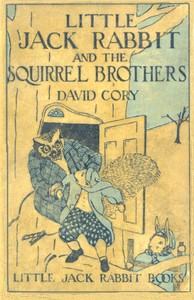
The catalog record for Little Jack Rabbit and the Squirrel Brothers — Reading Companion provides practical reading context through 17,978 words, 1 hr 19 min estimated reading time, and 5 detected text sections.
The text analysis averages about 17.4 words per sentence, while the detected sections provide another way to judge how the source is divided.
Project Gutenberg metadata also associates the work with “Animals -- Juvenile fiction,” connecting these edition facts with the source record’s subject description.
Explore this collection
These alternatives are selected using recorded categories and estimated reading time.
About 76 minutes
Childrens Adventures
17,421 recorded words. 3 minutes difference from this book's estimate.
View Gutenberg source #25943About 88 minutes
Childrens Adventures
20,122 recorded words. 9 minutes difference from this book's estimate.
View Gutenberg source #17616About 67 minutes
Childrens Adventures
15,362 recorded words. 12 minutes difference from this book's estimate.
View Gutenberg source #20544Search stored excerpts and compare books → Choose by your preferences →
Choices use stored catalog measurements. Estimates vary with reading speed. A shared category is a catalog label, not a claim that two books have the same argument or literary quality.
Search reads excerpt text stored with this catalog and links to its associated Gutenberg record. The connection is stored in the site database; this tool does not recheck that every excerpt is word-for-word identical to that external record. Excerpt search does not cover every chapter and does not verify historical publication dates.
Catalog snapshot checked: 2026-09-25. Coverage: 94 public books, 94 available source excerpts.
Read the complete public-domain text at its original source.
Read on Project GutenbergThe first chapter, “The Game of Marbles,” immediately establishes the book’s pattern: a rhymed moral couplet (“Never stop upon your way, / Just to fool around and play”) is followed by a story that illustrates the rule—Little Jack Rabbit skips school to play marbles with the Squirrel Brothers, using red and yellow oak apples as marbles. The narrator’s interjection (“But, oh dear me”) and the robin’s cry of “Ding-a-ling! ding-a-ling!” signal a light, didactic tone that recurs throughout.
This opening also introduces the book’s rhythmic prose, with phrases like “clipperty clip, lipperty lip” appearing repeatedly, and the use of animal characters who speak in polite, conversational English. The setting—a meadow with a schoolhouse—is sketched minimally, leaving room for the action and dialogue to drive the story.
The excerpts reveal a consistent structure: each chapter begins with a rhymed couplet or stanza that states a moral or observation, followed by a prose narrative that dramatizes it. For example, “Miss Pussy” opens with a poem about pumpkins, apples, grapes, and an empty crow’s nest, then moves into a scene where Little Jack Rabbit meets a black cat. The narrator frequently uses repetitive phrases like “clipperty clip, lipperty lip” to describe movement, and interjections such as “Goodness me” or “let me tell you” to create a conversational, storytelling voice.
This rhythmic quality extends to the dialogue: characters often speak in short, exclamatory sentences (“Gracious me!” “Ha, ha!”). The book also includes embedded songs, like the canary’s verse in the earlier excerpt, which adds variety to the prose. Readers should expect a playful, oral-tale style that prioritizes sound and repetition over detailed description.
The excerpts consistently pair adventure with instruction. In “The Game of Marbles,” the lesson is about punctuality and obedience: Little Jack Rabbit is tempted to play instead of going to school, but the ringing bell saves him. Later, Professor Jim Crow appears with his “little Black Book” and reads a proverb: “The early worm must look out for the bird,” a twist on the familiar saying. The narrator notes that the professor teaches “arithmetic and the Golden Rule, and sometimes Latin and sometimes Greek.”
These moral moments are woven into the plot without heavy-handedness. The rabbit’s mother also reinforces lessons, as when she calls him “Bunny Boy” to wake him early. The book’s subtitle and chapter titles (e.g., “Don’t Worry”) further emphasize its didactic intent. However, the excerpts do not show the full resolution of any moral arc, so readers should note that the lessons may be cumulative rather than resolved in each chapter.
The excerpts introduce several animal characters, each with distinct speech patterns and roles. Little Jack Rabbit is polite and curious, often asking questions (“What are you doing out here?”). The Squirrel Brothers—Featherhead and Twinkle Tail—are playful and slightly mischievous, using oak apples as marbles. Miss Pussy speaks in a “purring voice” and is described with green eyes and a pink ribbon, while Professor Jim Crow is a pompous educator who carries a book and recites proverbs.
The Farmer’s dog appears as a threat, but the narrative assures readers that the rabbit is never caught. The animals interact in a world where predators and prey coexist with humor: the rabbit tells Miss Pussy not to bother his friend Timmy Meadowmouse. This gentle, non-violent treatment of animal relationships is typical of early 20th-century children’s literature. The excerpts do not reveal whether these characters reappear or develop across the book.
The excerpts show a clear seasonal progression. The opening chapter takes place in a school-day setting with no explicit season, but later excerpts mention “cool November morning,” “frosty dew,” and “brown and withered” meadow grass. In “Miss Pussy,” the poem describes pumpkins, apples, and grapes, suggesting autumn. The narrator notes that “most of the birds have flown to the sunny South.”
This seasonal backdrop is conveyed through brief, sensory details rather than lengthy descriptions. The “old crow’s nest” on a “lonely pine” and the “hollow stump” where Miss Pussy lives are typical of the book’s simple, evocative settings. The weather also affects the plot: Billy Breeze is “chilly,” and the rabbit’s mother urges him to get up early. Readers can expect the changing season to frame the adventures, though the excerpts do not indicate whether the story covers a full year or just autumn.
As you read, pay attention to how the rhyming openings set up each chapter’s theme, and notice the repeated phrases that give the prose a sing-song quality. The book’s short chapters and episodic structure make it suitable for reading aloud, with each installment offering a self-contained incident. The excerpts suggest that the narrative voice is as important as the plot—the narrator’s asides and playful commentary are part of the charm. Keep an eye on Professor Jim Crow’s appearances, as his “little Black Book” may provide a thread linking the moral lessons.
Reading about Little Jack Rabbit's gentle lessons with Professor Jim Crow, I recalled sitting on my grandfather's porch, the same unhurried rhythm in my chest. Another old tale, Little Sky-High; Or, The Surprising Doings of Washee-Washee-Wang — Context and Discussion, whispered a similar warmth—a patient world where every small encounter held a quiet moral, unhurried as summer dust.
Build a private reading journal entry for this title.