About 280 minutes
The Black Buccaneer — Themes and Context
Childrens Adventures
64,342 recorded words. 3 minutes difference from this book's estimate.
View Gutenberg source #28418
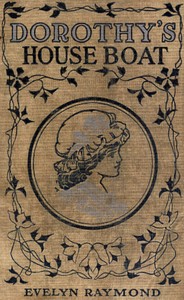
Before opening Dorothy on a House Boat — Inside the Classic, the edition data offers a quick orientation: 64,956 words, 4 hr 43 min estimated reading time, and 7 detected text sections.
The text analysis averages about 15.4 words per sentence, while the detected sections provide another way to judge how the source is divided.
Project Gutenberg metadata also associates the work with “Family -- Juvenile fiction,” connecting these edition facts with the source record’s subject description.
Explore this collection
These alternatives are selected using recorded categories and estimated reading time.
About 280 minutes
Childrens Adventures
64,342 recorded words. 3 minutes difference from this book's estimate.
View Gutenberg source #28418About 278 minutes
Childrens Adventures
63,760 recorded words. 5 minutes difference from this book's estimate.
View Gutenberg source #20053About 288 minutes
Childrens Adventures
66,168 recorded words. 5 minutes difference from this book's estimate.
View Gutenberg source #21666Search stored excerpts and compare books → Choose by your preferences →
Choices use stored catalog measurements. Estimates vary with reading speed. A shared category is a catalog label, not a claim that two books have the same argument or literary quality.
Search reads excerpt text stored with this catalog and links to its associated Gutenberg record. The connection is stored in the site database; this tool does not recheck that every excerpt is word-for-word identical to that external record. Excerpt search does not cover every chapter and does not verify historical publication dates.
Catalog snapshot checked: 2026-09-25. Coverage: 94 public books, 94 available source excerpts.
Read the complete public-domain text at its original source.
Read on Project GutenbergThe catalog subjects for Dorothy on a House Boat list family, houseboats, gifts, and the fictional character Dorothy Chester. The excerpts confirm a gift: a letter offering Dorothy a houseboat, which Mrs. Betty Calvert calls a “magnificent gift.” The houseboat, named the Water Lily, becomes the setting for a planned cruise. However, the catalog does not hint at the regional Maryland setting or the colloquial speech of characters like Mr. Stillwell, who says, “I’d light right out from this region.” The excerpts also show that the story involves multiple adult figures—Mrs. Calvert, Mrs. Bruce, and Colonel—whose interactions drive the plot, not just Dorothy herself.
The catalog subject “Gifts” points to the central event: a letter offering Dorothy a houseboat. Mrs. Calvert’s reaction—“Well, of all things!”—and her question “do you want an elephant?” suggest the gift is unexpected and whimsical. The excerpts do not reveal who sent the letter or why, only that it arrives in the morning mail. The gift is not a simple object but a vessel that enables a journey, aligning with the houseboat subject. Yet the catalog omits the gift’s source, leaving readers to infer from the foreword that it follows Dorothy’s earlier adventures.
The excerpts are rich with regional dialogue that the catalog subjects do not capture. Mr. Stillwell, a farmer, uses phrases like “I’d get shet of all them gapin’ Corner-ites” and “fetch up alongside Deer-Copse on the Ottawotta Run.” Mrs. Bruce says, “It plumb wears me out to have folks fussin’ so.” These speech patterns ground the story in Maryland’s Eastern Shore, a setting absent from the catalog. The contrast between the Colonel’s formal manner and the farmer’s plain talk adds social texture. The catalog’s “Family” subject is present but secondary to the local color.
The houseboat subject is realized through detailed planning. Mrs. Calvert asks Mr. Stillwell about “how to safely get the most pleasure out of it,” and he proposes a tug to haul the Water Lily up the Branch to the Ottawotta Run. The excerpts show negotiations: “Is ’t a bargain? If ’tis, I’ll get right about it.” The catalog does not mention the tug, the mule, or the poles used for propulsion. The cruise is a collective effort, with Mrs. Bruce and Chloe also involved. The foreword promises “what follows the receipt of this letter,” but the excerpts only cover the early stages of departure.
The excerpts offer a narrow window into the book’s first chapters, focusing on the gift’s arrival and the cruise’s planning. Readers should note that the catalog subjects underrepresent the regional dialect and adult-driven plot. The houseboat is a catalyst for adventure, but the story’s tone is set by the interplay of characters like the practical Mr. Stillwell and the aristocratic Colonel. The full text likely expands on Dorothy’s role and the promised cruise.
Reading the catalog subjects for Dorothy on a House Boat — family, gifts, the river itself — I remembered being ten, flat on my stomach with a flashlight, when a borrowed houseboat in another story felt like the safest room I’d ever known. The Banner Boy Scouts on a Tour; or, The Mystery of Rattlesnake Mountain — Story, Setting & Ideas gave me that same slow warmth: boys unpacking gear, hills humming with secrets, nothing urgent but the next chapter.
Answer a few questions and save a private reflection on this device.