What Two Children Did — A Reader’s Guide

(1 User reviews)   264
In Category - School Stories
Chittenden, Charlotte E. (Charlotte Elizabeth), 1854-1906 Project Gutenberg 2005 Not confirmed
Christian life -- Juvenile fiction; Conduct of life -- Juvenile fiction; Friendship -- Juvenile fiction; Weddings -- Juvenile fiction; Children and death -- Juvenile fiction; Sisters -- Juvenile fiction; Fatherless families -- Juvenile fiction; Mothers and daughters -- Juvenile fiction; Seaside resorts -- Juvenile fiction Readers of public-domain and historical texts
Project Gutenberg digital edition en

Edition facts

Words 30,912
Reading time 135 min
Text sections 4

What Two Children Did — A Reader’s Guide can be approached with a clearer sense of reading commitment from its source measurements: 30,912 words, 2 hr 15 min estimated reading time, and 4 detected text sections.

The text analysis averages about 17.1 words per sentence, while the detected sections provide another way to judge how the source is divided.

Project Gutenberg metadata also associates the work with “Christian life -- Juvenile fiction,” connecting these edition facts with the source record’s subject description.

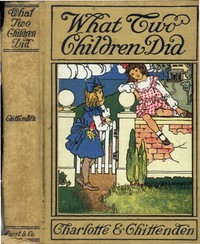
Charlotte E. Chittenden's 1903 novel follows sisters Ethelwyn and Beth on a seaside visit, weaving their everyday mischief, imaginative play, and moral lessons through dialogue and small adventures. The opening train scene establishes their distinct voices and mother's watchful presence.
Share
Editorial Edition Score 4.6/5

Calculated from edition completeness, EPUB availability, text structure and catalogue metadata. Not a user rating.

How this score is calculated
  • Description quality20 pts
  • Title & short description10 pts
  • Source metadata20 pts
  • Text length15 pts
  • Chapters / structure15 pts
  • EPUB file integrity20 pts

Total of 100 points, scaled to a 2.5-5.0 range. Editions with an empty description or a missing EPUB file are not scored.

Edition quality

Read the Text

They were in a Pullman car which was moving rapidly along in the darkness. Inside it was very bright and beautiful, and would have been most interesting to the children, had it not been for those two lines in their dear mother's face.

"She is thinking about the naughty things we have done," said Ethelwyn to Beth in a tragic tone, at the same time taking a mournful bite out of a large, sugary cooky. They had eaten steadily since starting, and any one who did not understand children, would have been alarmed at possible consequences.

On the seat between them there was a hospitable-looking basket with a handle over the middle and two covers that opened on either side of the handle. Underneath the covers and the napkins the children, entirely to their joy, had found sandwiches without limit. Some were cut round, others square, and all were without crust; inside they found minced chicken, creamy and delicious, also ham and a little mustard, and best of all were the small, brown squares with peanut butter between.

"It's like Christmas or a birthday, having these sandwiches," said Ethelwyn. "They're all different and all good, and each one seems better than the others."

Then they began on the cookies, and bit scallops out of the edges, while between times they thought about their last mistake and their mother's forehead lines.

Sitting up straight against the velvet cushioned seat, the two children looked about the same age; the two heads were nearly on a level, as were both pairs of feet stuck out straight in front of them; but Ethelwyn's came a little farther out than Beth's, and her golden head came a little farther up on the seat than Beth's dark one.

Just now there was a small cloud on their horizon. Although they found the interior of their palace car, the porter, and the passengers, fascinating, and the luncheon an endless feast, they both felt that before they slept they must straighten things out; hence their first question.

Mrs. Rayburn came back presently to a realizing consciousness of the two anxious faces opposite hers, and with a smile dismissed the sentinel lines.

"God never makes mistakes," said she, with refreshing faith and emphasis. "It is we who do that."

"I think," said Beth, slowly pondering on this, "that the old surplus in the garden of Eden who bothered Adam and Eve has something to do with it."

"Serpent, child," said Ethelwyn crushingly, beginning on cake.

"Surplus, I mean," said Beth, getting out a piece of cake for herself. "I'd give a good deal, sister, if you wouldn't always count your chickens before they're hatched!" Whereupon she climbed down and went over to sit by her mother, where she glared indignantly at her sister. Her dear "bawheady" doll was in her arms.

This doll was so called because early in life he had lost his wig, and thereby developed a capability for being a baby, a bishop, or a boy. There was a fascinating hole on top of his head, thus making it possible to secrete things like medicine or food until they were fished out with a buttonhook or darning needle. He was fed on cake now, but was generally given crusts, when there were any, because Beth did not like them.

"Why did you ask that question?" asked their mother.

"We thought you looked as though we'd made you an awful lot of trouble," said Ethelwyn, regarding the gorgeous ceiling of the car.

"Yes, you did, although I was not thinking of it just then; you ran away--"

"Walked, mother," corrected Beth, "to the 'lectric car, with grandmother's gold dollar, to go down to buy a trunk specially for our dolls--"

"It was fun, mother," put in Ethelwyn, "only when we stood up and fussed to see who'd push the button to get off, the man slowed up so fast we both fell through a fat man's newspaper into his lap and upon his toes. He was angry too, for he just said 'ugh,' when we asked him to excuse us, please. The trunk man gave us back four big silver nickels with the trunk; we put them inside, and you can have them, mother, to help heal your feelings."

"Your mistake was in not asking--"

"We thought you'd better not be 'sturbed, 'cause ever since grandpa and brother died, you've thought such a lot, and looked so worried--"

"But I was more worried about you when I found you weren't in the house or grounds; I thought you might be lost, and I was about telephoning to the police station about it, when you came, and there was just time to catch the train."

Then Ethelwyn got down, and went over to squeeze in on the other side of her mother. She knelt on the cushions and patted the dear face until the little smile they loved, came out again, and drove the care lines away.

"Children are such a worry, mother," she said in a funny, prim fashion, "that I should think you'd be sorry you ever bought us."

"But we are going to be good from now on, so good you'll nearly die laughing," said Beth, getting up to pat her side of the face.

Their mother laughed now in a bright fashion they loved, and squeezed them up tightly.

"No, no, chickens," she said, "I'm never sorry I bought you; you were bargains, both of you, but I've had much to think of, and plan for, in the last few months, and perhaps I've neglected you somewhat."

"Can you tell us 'bout things, mother?" asked Ethelwyn. "P'raps we could help some."

"Yes, I am going to, but not now, for the porter wishes to make up our beds."

"There are stickers in my eyes," said Beth, yawning. "There's one more question I'd like to know about though," she said as they moved across the aisle. "If God can't make mistakes, why does He let it be so easy for folks to?"

"That I don't just know," said her mother, "but it's a good sign when we know they are mistakes."

It was only a short time after this that they were all asleep in their curtained beds, and while it was still dark, and the children were too sleepy to realize much about it, they reached their destination and were driven to the seashore, cottage where they were to spend the summer.

_CHAPTER II_ _At the Shore_

Underneath the washing waves The requiem of the sea, For those whose hopes are buried there, Is tolling ceaselessly.

It was interesting to go to sleep in a Pullman car, and to wake up in a dainty room hung with rosebud chintz draperies, and with an altogether delightful air of coziness about it.

But there was something outside their room that, like a magnet, drew them out of bed. They climbed on chairs, and gazed eagerly out of the windows.

The house they were in, was on a hill. Pine trees grew near, and there below them and very near, was the great silvery blue sea, with the sunshine flashing on its tossing waves? The children gasped with delight.

"It's another door to Paradise," said Ethelwyn.

"The gold place that shows where the sun sets is another one," said Elizabeth. Then they heard their mother, who had come in quietly, and in a moment was cuddling them up in her arms.

"We've lost a lot of time, I'm afraid," said Ethelwyn after they had given her a bear hug and a kiss.

"That ocean is the prettiest thing, mother. P'raps that's the way to Paradise where father and grandfather and brother have gone."

"Yes," said their mother, helping them into their clothes. "It is one of the ways."

"Tell us about this place, please," begged Ethelwyn, "and how we happened to come to such a de-lic-ious place. Will you have to work so hard, motherdy, here? And will the little lines come between your eyes?" Whereupon Elizabeth at once abandoned to their fate, her harness garters with their many buckles, and climbed up to see. Yes, the lines had gone, and she kissed the place to make sure before she climbed down again.

"Hoty potys is the twissedest things," she remarked, worse tangled than ever.

"Hose supporters, dear child," corrected Ethelwyn with the exasperating air that always roused Beth's wrath.

"This cottage," mother hastened to say, while she untangled the buckles with one hand and buttoned Ethelwyn's waist with the other, "belongs to Mrs. Stevens and her daughter, Dorothy. I have known them for years. Recently they wrote asking me to bring you children and come to them for the summer; they, too, were lonely, and they knew that I needed rest, quiet, and time to plan for the future. There are few people living here but fisher folk--"

"Yes, like them in trade, at least. They are poor and need help--"

"Are we rich people now, and can we buy things for them?"

"Your grandfather left you a great deal of money, children, and you must learn to use it generously. It was his wish, and mine, that you should begin at once to think about such things before you learn to love money for its own sake, and what it will buy."

"O, we don't care at all, do we, sister?" said Beth, stretching up on tiptoe to get her "bawheady" from the bureau. "We'd just as lief give it away as not, 'cause we've always you, mother dear."

"Is the money more than grandmother's gold dollar?" asked Ethelwyn.

"O, then we'll have fun spending it for folks; I'd like to. But, oh, I'm hungrier than I ever was before."

"Me, too," said Beth. "I feel a great big appeltite inside me."

They decided at once that the dining-room also was charming, with its cheery open fire of snapping pine knots, for the air outside was chilly. Then, too, there was a parrot on a pole, who greeted them with, "Well, well, well, what's all this? Did you ever?"

Miss Dorothy Stevens had the kind of face that children take to at once. There never could be any question about Aunty Stevens, who laughed every time they said anything, and who on top of their excellent breakfast, brought them in some most delicious cookies--just the kind you would know she could make, sugary and melty, entirely perfect, in fact,--to take down on the beach for luncheon.

After breakfast was over they at once started for the beach. Sierra Nevada, their colored nurse, following them with small buckets, shovels, wraps, and cushions.

"Mother, this is the nicest place, and I love the Stevenses; but why are they sad around the eyes, and dressed in black, like you? Has their father gone to Paradise too?" asked Ethelwyn, as they walked along.

"Yes, dear. Besides, the young captain whom Dorothy was going to marry went away last year and, his ship was wrecked and he has never been heard from. So they fear he was drowned."

"O, mother, can this pretty sea do that? What was it they were saying about a tide?"

Their mother tried to explain all she knew about the tides, and when she had finished, Ethelwyn said:

"I think it would be easier to remember to call it tied, and then untied."

_CHAPTER III_ _Beth and Her Dolls_

Dollie's poor mother is quite full of care, As she who lived in a shoe, For this child is tousled, this one undressed-- Mother has all she can do. More dollies there are, than possible clothes, Some of them must go to bed. And some to be healed by mother with glue, Lacking an arm or a head. Then others, wearing the invalid's clothes, Care not a fling or a jot Nor know that to-morrow their own fate may be The bed, or the mucilage pot.

The first Sunday that the children were at the seashore was warm and beautiful.

Mrs. Rayburn and Mrs. Stevens went to church in the picturesque stone chapel built by a sea captain, as a memorial to his daughter who was drowned on the coast some years before this.

"We'll be really better girls to stay at home some of the church time," said Ethelwyn at breakfast, "we'll go this evening with Miss Dorothy."

"My dolls are needing a bath and their best clothes for Sunday-school," said Beth to Ethelwyn, who had decided to go down on the beach; "and I can do it all comfy and nice while you are gone."

So Ethelwyn and 'Vada went for a run on the beach, and mother Elizabeth, with a look of happy care on her face, and her beloved six dolls in her arms, came out on the porch, where she had already taken a basin of water, soap, a tiny sponge, and towels.

Directly she became aware of some one near her, and looking up saw a girl with dark eyes and short, straight hair watching the proceedings with much interest, her hands clasped behind her back.

"My name is Nan," said the visitor as soon as she caught Elizabeth's eye, "Who are you? Is this your house? We've just come, and mother is in bed with a headache, and father's gone to church, so I'm roaming around seeking something to devour--"

"Does that mean eat?" said Elizabeth, a scene in one of her picture books of lions devouring their prey coming into her mind.

"I think it's what my father calls a figure of speech. He's a minister--a clergyman, you know. We've come down here to board, and he's going to have the services in the Chapel of the Heavenly Rest. Mother's sick about always, so I have to roam around--Say, I know a game; let's baptize your children."

"They don't need it; they're not born in sin--"

"Everything is," emphatically. "Don't try to teach a minister's child things, for pity's sake. I'll do the baptizing. Come along."

The rainwater barrel, half sunken in the ground, was at one of the rear corners of the house.

"We are not allowed to play in that, I think," said Elizabeth uneasily.

"That doesn't mean me, I'm older'n you. Here, give me the doll without a wig."

Down went the beloved "bawheady" with a thud that carried desolation to Beth's tender heart. Four others followed in quick succession before Beth could protest. Then clinging to Arabella, she started to run. Nan tried to run after her, but caught her foot on the barrel's brim and straightway joined the five dolls. Elizabeth opened her mouth to shriek, when in an opportune moment, a young man appeared on the scene, and speedily fished out Miss Nan, who dripped and coughed and choked; inarticulate, but evidently wrathy sounds wrestled for utterance in her throat. At last she shook herself free.

"I'm perfectly degusted with this whole preformance," she said as she went stalking off, dripping as she went.

Then the young man laughed and laughed, until he became aware of Elizabeth wistfully staring at him.

"What is it?" he asked.

"My dolls. They're baptized clear to the bottom; please get 'em out."

"I'll do it, if you will take this note to Miss Dorothy Stevens," said the young man, at once throwing off his coat and pushing up his shirt sleeve. Beth, before she trotted off, saw that he had a blue anchor on his arm. When she came back, the rescued five lay stretched on the grass in a pathetic row, and she at once ran to her prostrate children.

"You are to go to the parlor and tell Miss Dorothy all about it," she said, in passing, to their rescuer. "Your note made Miss Dorothy cry; and she was all white 'round her mouth. Thank you for the dolls," she called as an afterthought.

So busy was she drying her afflicted family that it was some time after the others had reached home that 'Vada, wildly excited, came to find Elizabeth and to tell her that Miss Dorothy's sweetheart had come back.

"From Paradise?" queried Beth, getting up at once and bristling all over with questions she wanted to ask him about that interesting place.

"Mighty nigh," said 'Vada, rolling her eyes. "He was shipwrecked on the raging main, and hit on de head wid somefin that done knock all de sense out of him, so he's pick up by some folks dat didn't know 'im, an' he went cruisin' aroun', till he come to, and, by 'me by, back to see his sweetheart."

Elizabeth went into the parlor later on, and stared so insistently at the young captain that her mother drew her gently to one side and whispered to her.

"But I'm anxious to see a sweetheart that has been in Paradise, mother," she explained.

_CHAPTER IV_ _The Wedding_

Bells ring, Birds sing, Every one is gay; Hearts beat, Chimes sweet, On a bridal day.

It was one of the things for the children to remember always, that Miss Dorothy was married while they were there to help.

They helped so much in the matter of scraping all the cake and icing pans, stoning, and especially eating, raisins, that it was a wonder they were not ill.

The morning on which the wedding was to take place dawned as bright and golden as could be desired.

It was a very simple, pretty wedding in the stone chapel, towards which, in the early morning, the bridal party walked. Nan, Ethelwyn, and Elizabeth went ahead, bearing flowers, and after them came Miss Dorothy in her white gown, clinging to the arm of her sailor lover.

Mrs. Stevens and the children's mother, together with a few friends, awaited them in the pretty church, and Nan's father married them. They then all went to the bride's home for breakfast, immediately after which, the young couple were going away for a year. This fact, and the mother's sad face impaired the appetites of the guests, with three noble exceptions. The trio at the end of the table ate with zest and unimpaired enthusiasm, of the good things that they fondly believed might never have reached their present point of perfection had it not been for their skill.

"Should you think," Elizabeth paused to say, in a somewhat muffled voice, entirely owing to plum cake and not grief, "that one of us is married too?"

"My father," returned Nan loftily, "is not given to making mistakes of that kind. There weren't husbands enough to go 'round anyway."

"You've been helping make one, child, and you ask that!"

So Elizabeth concluded it was a small portion of the refreshments that had escaped her notice.

Afterwards they went down to the harbor from which the bride and groom were to sail.

"Like the owl and the pussy cat," said Ethelwyn, cheerfully.

As they kissed their friend good-bye, they placed around her neck a pretty chain, hanging from which was a medallion with their pictures painted on it.

"You can look at us when you get lonesome," suggested Beth.

The last good-bye was said, and they drove sadly home in a fine, drenching rain that had suddenly fallen like a vail over their golden day.

'Vada had started the open fires and they were cheerfully cracking, while Polly from her pole croaked crossly, "Shut up, do! Quit making all that fuss!"

Mrs. Rayburn took Aunty Stevens away with her, and by and by in the afternoon, they found her tucked up on the couch in their sitting-room looking somewhat happier.

"Aren't you glad you have us, and specially mother?" asked Beth, kissing her.

There was only one answer possible to this, and it was given with such emphasis that Ethelwyn nodded and said, "That's the way we feel. Mother knows how to fix things right better'n anybody, unless it should be God."

"Let's sing awhile, sister, while mother thinks of a story or two," suggested Beth.

So they squatted in front of the grate and sang,

"Chick-a-dee-dee, chick-a-dee-dee, I am so glad that Jesus loves me."

Then they sang what they called "Precious Julias,"

"Little children who love Mary Deemer."

"Why," Beth stopped to ask, "does it say Precious Julias when it's 'bout Mary Deemer, sister?"

"Middle name, prob'ly," answered Ethelwyn; "anyway that's Mary Deemer," pointing to a picture of Murillo's "Magdalene," "and the reason that she's loved by children, is because she is pretty and good. If you are good, Elizabeth, people will love you."

"I'm as good as you are, anyway," began Beth wrathfully, when she saw Nan in the doorway.

"May I come in?" she asked, wistfully. "Mother has a headache, father's gone fishing in a boat, and I've a toothpick in my side."

The story opens on a moving train, where Ethelwyn and Beth sit opposite their mother, whose furrowed brow signals displeasure. The children interpret her expression as a sign of their own misdeeds, yet they continue eating from a basket of crustless sandwiches and scallop-edged cookies. The narrator notes their steady consumption with a wry aside about adults who might worry. This initial scene establishes the sisters as observant, anxious, and distractible—qualities that will shape their seaside adventures.

Chittenden uses the train journey to introduce the girls' contrasting appearances: Ethelwyn's golden hair and slightly longer legs versus Beth's dark hair. Their dialogue reveals a preoccupation with mistakes and divine intention, as when Beth asks whether God made a mistake sending them to their destination. The mother's silent thinking becomes a recurring motif, a barometer the children watch closely.

The Sisters' Voices and Worries

From the first chapter, Ethelwyn and Beth speak in distinct registers. Ethelwyn is the more dramatic, declaring in a “tragic tone” that their mother is thinking about “the naughty things we have done.” Beth, meanwhile, poses theological questions with unsettling directness: “Do you think God made a mistake when He sent us here?” Their exchanges are peppered with domestic details—the basket with two covers, the peanut butter sandwiches—that ground their anxieties in concrete comforts.

The mother's “two little lines” between her eyes function as a silent gauge of adult displeasure. The children interpret this physical cue with the gravity of augurs, yet their attention quickly returns to food. This pattern of worry followed by distraction recurs throughout the excerpts, suggesting that the sisters' moral growth will involve learning to sustain concern beyond the immediate moment.

Dress-Up and the Minister's Camera

At Grandmother Van Stark's, Beth escapes a conversation she deems “prehistoric” by rummaging in the attic. She finds an old figured silk gown and a green silk calash, then parades past the oblivious adults into the road. The minister, encountering her disguised as a parlor maid, laughs and asks to photograph her for a church sale. Beth agrees, then remembers her promise to watch over grandmother and hurries back.

The episode balances mischief with responsibility. Beth's costume play is spontaneous, but her remorse—“it reminds me of how I forgot to take care of my Grandmother Van Stork”—shows she internalizes her lapse. The minister's laughter, which Beth notes as frequent, becomes a gentle corrective. The photograph, sold at the fair, serves as a lasting reminder of her failure, which she hopes will “improve my thinkery.”

Pony Rides and Unwelcome Advice

When the family prepares to return, Beth rides the pony Ninkum in triumph. The moment is undercut by the pony's grazing, which nearly unseats her, and by Ethelwyn's shouted advice from the phaeton. The mother silences Ethelwyn with a “maternal command,” restoring order. Beth's vexed remark to Ninkum—that the pony is making grandmother feel underfed—reveals her concern for others' perceptions even in frustration.

The ride itself is described as “bliss,” a rare moment of uncomplicated joy. Chittenden juxtaposes small irritations (the pony's rudeness, sister's interference) with the pleasure of galloping down a flower-bordered road. This pattern of minor obstacles within larger satisfactions recurs across the excerpts, suggesting that the children's adventures are never entirely smooth but are nonetheless rewarding.

The Wedding and the Lost Invitation

Later chapters involve a wedding, a lost invitation, and a visit to a “Home.” The excerpts show the children navigating social expectations: Beth dresses up to match the “long-way-back time” of the older ladies, and the minister treats the former parlor maid without patronage. These moments highlight the novel's interest in class and age hierarchies, though the children's perspective keeps the tone light.

The lost invitation introduces a plot complication not fully resolved in the excerpts. Ethelwyn's “countenance” peering above the phaeton top and her “exceedingly unwelcome advice” suggest ongoing sibling friction. The mother's role as arbiter remains constant, but the children increasingly act on their own initiative, whether buying a baby or visiting grandfather. The excerpts leave the outcome of these schemes uncertain, inviting readers to follow the full narrative.

Chittenden's novel rewards attention to small gestures: a mother's forehead lines, a pony's grazing, a child's remorse over a forgotten promise. The excerpts offer a series of vignettes rather than a continuous plot, so readers should expect episodic structure. Pay particular attention to how the sisters' voices develop across chapters, and how their moral lessons emerge from everyday incidents rather than dramatic crises. The title's question—what two children did—is answered not in grand deeds but in the accumulation of small choices.

Sometimes a book stays with you not for its plot, but for its quiet truth—like how those sisters’ small seaside moments still feel real. What Two Children Did left me thinking about that same gentleness. Later, I found a similar warmth in Just Patty — Key Ideas to Explore, where friendship speaks softly between the lines. It simply lingered, the way old stories do.

Noah Clark
1 week ago

5
5 out of 5 (1 User reviews )

Add a Review

Your Rating *
  • ...
    Tyler Leblanc - 2 weeks ago
    This story is well-intentioned but falls short in execution. The characters are flat, and the 'adventures' are mundane and unconvincing. The plot is barely there, consisting of a series of minor events that are resolved too easily. The writing is bland and lacks descriptive flair, making it hard to stay engaged. While the message about doing good is nice, it does not compensate for the lack of story. Younger readers may lose interest quickly.

  • ...
    Kevin Mccarty - 2 weeks ago
    A heartwarming story that illustrates the power of curiosity and kindness. 'What Two Children Did' is a beautiful narrative about siblings who use their initiative to make a difference in their small world. The characters are relatable, and their adventures are both realistic and inspiring. The lessons about empathy and community are timeless. This is a lovely read for children, encouraging them to be proactive and thoughtful. Highly recommended.

  • ...
    Caleb Kimberly Berg - 1 week ago
    A simple and sweet story about two children who decide to help others in their neighborhood. It's a gentle read with a positive message, and the children's enthusiasm is endearing. However, the plot is quite simplistic and might not capture the attention of kids used to more action-packed stories. The moral is clear, but the execution is a bit flat. Still, it's a decent choice for a quiet afternoon read.


Reader reflection

How did this book work for you?

Your answers remain private and are stored only in this browser.

Your progress 0 / 10
1

Where are you in your reading?

2

How much did you enjoy the reading experience?

3

Would you encourage someone else to read it?

4

Did the language feel accessible?

Related eBooks