About 249 minutes
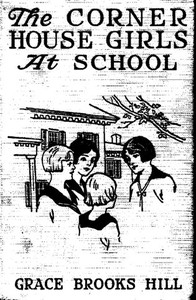
The Corner House Girls at School — Reading Companion
School Stories
57,172 recorded words. 19 minutes difference from this book's estimate.
View Gutenberg source #21034

For Dorothy at Oak Knowe — Context and Discussion, the stored edition analysis reports 61,606 words, 4 hr 28 min estimated reading time, and 6 detected text sections.
The text analysis averages about 16.2 words per sentence, while the detected sections provide another way to judge how the source is divided.
Project Gutenberg metadata also associates the work with “Schools -- Juvenile fiction,” connecting these edition facts with the source record’s subject description.
Explore this collection
These alternatives are selected using recorded categories and estimated reading time.
About 249 minutes
School Stories
57,172 recorded words. 19 minutes difference from this book's estimate.
View Gutenberg source #21034About 244 minutes
School Stories
55,894 recorded words. 24 minutes difference from this book's estimate.
View Gutenberg source #16253About 242 minutes
School Stories
55,482 recorded words. 26 minutes difference from this book's estimate.
View Gutenberg source #30860Search stored excerpts and compare books → Choose by your preferences →
Choices use stored catalog measurements. Estimates vary with reading speed. A shared category is a catalog label, not a claim that two books have the same argument or literary quality.
Search reads excerpt text stored with this catalog and links to its associated Gutenberg record. The connection is stored in the site database; this tool does not recheck that every excerpt is word-for-word identical to that external record. Excerpt search does not cover every chapter and does not verify historical publication dates.
Catalog snapshot checked: 2026-09-25. Coverage: 94 public books, 94 available source excerpts.
Read the complete public-domain text at its original source.
Read on Project GutenbergEvelyn Raymond opens Dorothy at Oak Knowe with a burst of competing voices: hackmen shouting for passengers at a Toronto railway station, each trying to claim the newly arrived American girl. The narrative voice immediately establishes Dorothy's vulnerability through short, breathless sentences and her own exclamation, “Oh! what shall I do! What shall I do!” The scene is crowded and noisy, yet Dorothy feels utterly alone. This contrast between external bustle and internal isolation sets the tone for a story that frequently shifts between public commotion and private anxiety.
Later, the pace changes dramatically. A missing-pupil crisis unfolds in near silence: the Lady Principal and the maid Dawkins move by candlelight, speaking in whispers to avoid alarming the sleeping school. The prose slows, lingering on the soft light and the chattering teeth of the searchers. Raymond uses this change in tempo to heighten suspense, moving from the chaotic opening to a hushed, tense investigation that reveals the school's hidden fears.
The opening chapter relies on a cacophony of anonymous voices: hackmen call out hotel names, each trying to outshout the others. Dorothy is identified by her appearance—“a dark haired girl in navy blue”—but no one speaks to her with genuine concern. The narrator reports the hackmen's cries in direct dialogue, creating a sense of overwhelming noise that mirrors Dorothy's disorientation. This technique recurs later when servants react to the disappearance: a housemaid cries out about “imps” and “the Evil One,” and the narrative records her superstitious outburst verbatim. Raymond uses these collective voices to show how panic spreads through a community, contrasting them with the measured, authoritative speech of the Lady Principal. The effect is a layered soundscape where the reader must distinguish reliable information from hysterical rumor.
Raymond manipulates narrative pace to control tension. The search for the missing girl begins with deliberate slowness: the Lady Principal and Dawkins “step softly,” take candles, and examine each room in silence. The prose lingers on small actions—peering behind furniture, checking closets—while the reader knows time is passing. Then, at daybreak, the pace accelerates. The Lady Principal appears in the kitchen, delivers a terse speech, and threatens the constabulary. The servants' mutiny erupts in rapid, panicked dialogue. This shift from slow, candlelit searching to brisk, confrontational exposition mirrors the escalation of the crisis. Raymond also uses ellipsis: the text cuts from the search directly to the threat of police, leaving the reader to infer the intervening hours. Such gaps in the narrative create a sense of urgency and incomplete knowledge.
The physical environment of Oak Knowe is rendered through sensory details that reinforce mood. The search takes place in darkness, with only candlelight to guide the characters. The narrator notes that the Lady Principal is “shaking, either with cold or nervousness,” and Dawkins's teeth are “fairly chattering.” These bodily reactions tie the setting to emotional states. The school itself is described as a place where “never a lock is turned,” a detail that the Bishop has mandated for fire safety. This rule becomes ironic when a girl vanishes without explanation. Later, the kitchen scene introduces the sounds of “three hundred hungry girls” awaiting breakfast, a reminder of the school's scale and the pressure on its staff. Raymond uses such concrete details—candlelight, chattering teeth, locked doors—to ground the mystery in a believable, tactile world.
Readers attentive to Raymond's shifts in pace will find the mystery deepened by the contrast between public noise and private fear. The narrative voice moves fluidly from Dorothy's desperate interior monologue to the Lady Principal's controlled commands, and the setting—from the chaotic station to the silent, candlelit halls—reinforces the emotional stakes. Pay attention to how the author uses dialogue to convey collective panic versus individual resolve; these vocal contrasts are central to the story's tension.
Sometimes I think about Dorothy’s frantic candlelit search at Oak Knowe, how fear changes the feel of a hallway. It made me recall the quieter, more determined energy in Ruth Fielding in Moving Pictures; Or, Helping the Dormitory Fund — Themes and Context, where helping feels less like panic and more like a steady, familiar hope. Both linger with me.
Build a private reading journal entry for this title.