About 209 minutes
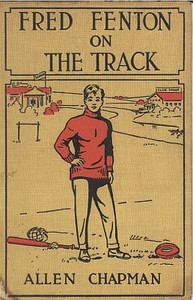
Fred Fenton on the Track; Or, The Athletes of Riverport School — A Reader’s Guide
School Stories
47,968 recorded words. 5 minutes difference from this book's estimate.
View Gutenberg source #23763
This digital edition of Ruth Fielding in Moving Pictures; Or, Helping the Dormitory Fund — Themes and Context is described by source-level measurements including 46,858 words, 3 hr 24 min estimated reading time, and 5 detected text sections.
The text analysis averages about 12.4 words per sentence, while the detected sections provide another way to judge how the source is divided.
Project Gutenberg metadata also associates the work with “Schools -- Juvenile fiction,” connecting these edition facts with the source record’s subject description.
Explore this collection
These alternatives are selected using recorded categories and estimated reading time.
About 209 minutes
School Stories
47,968 recorded words. 5 minutes difference from this book's estimate.
View Gutenberg source #23763About 192 minutes
School Stories
44,089 recorded words. 12 minutes difference from this book's estimate.
View Gutenberg source #14630About 232 minutes
School Stories
53,162 recorded words. 28 minutes difference from this book's estimate.
View Gutenberg source #21048Search stored excerpts and compare books → Choose by your preferences →
Choices use stored catalog measurements. Estimates vary with reading speed. A shared category is a catalog label, not a claim that two books have the same argument or literary quality.
Search reads excerpt text stored with this catalog and links to its associated Gutenberg record. The connection is stored in the site database; this tool does not recheck that every excerpt is word-for-word identical to that external record. Excerpt search does not cover every chapter and does not verify historical publication dates.
Catalog snapshot checked: 2026-09-25. Coverage: 94 public books, 94 available source excerpts.
Read the complete public-domain text at its original source.
Read on Project GutenbergThe book opens not with a classroom or dormitory scene but with Ruth Fielding standing on a high bank by the roadside, pail of barberries in hand, watching a commotion across the fields toward the Lumano River. Her clear question—'What in the world are those people up to?'—immediately orients the reader toward action and observation. The camera-like framing of the scene, with Ruth as the focal point, foreshadows her entry into the world of moving pictures. The narrative voice is brisk and dialogue-driven, establishing Ruth as alert and decisive, while her chum Helen remains distractedly seated in an automobile, a contrast that recurs throughout the series.
The story’s central conflict is introduced through a disaster: the West Dormitory burns down. Ruth and her friends must raise funds to rebuild, and the motion picture scheme becomes their solution. Yet the fire also brings a quieter tension. Amy Gregg, a flaxen-haired girl who roomed near the fire’s origin, is suspected by Ruth of having left a candle burning. Ruth asks Mrs. Tellingham to let Amy stay with them, but Amy remains sullen, refusing to contribute even a dollar to the fund. She insists the school should pay her for her lost clothes. This refusal isolates her from the other girls, who drop her company. The narrative treats Amy’s behavior as a puzzle rather than a simple villainy, and Ruth’s protective instinct—keeping Amy’s possible role in the fire secret—adds a layer of moral complexity.
Among the boardinghouse residents is Mrs. Sadoc Smith’s grandson, Henry, universally called ‘Curly.’ His backstory is told with unusual specificity: forced into Fauntleroy suits and long curls until he paid another boy ten cents and a glass agate to cut them off, then stole oversized trousers and ran away in a freight car. His grandmother’s harsh discipline—keeping him in kilts past the usual age—is presented as the cause of his mischief. Curly finds an ally in Amy Gregg, who listens to his adventures and keeps his secrets. The text notes that ‘wild horses would not have drawn a word from her’ about his plans. This bond between the sullen girl and the scapegrace boy stands out as a quiet subplot, hinting at loyalties that cut across the main group of friends.
Ruth’s venture into moving pictures is framed as both a fundraising scheme and an extension of her natural curiosity. The opening scene—watching people run across fields—leads directly to her involvement with a film crew. The title’s phrase ‘in moving pictures’ signals a shift from earlier books’ settings (camps, ranches, lighthouses) to the nascent film industry. The narrative treats filmmaking as a practical, collaborative enterprise rather than a glamorous one. Ruth’s role is not that of a passive actress but of an organizer and problem-solver. The excerpts show her balancing berries, automobile repairs, and dialogue with friends, suggesting that the film project will demand the same kind of hands-on resourcefulness she applies to everyday life.
Readers familiar with the Ruth Fielding series will notice that this installment leans heavily on the contrast between Ruth’s outward competence and the hidden troubles of characters like Amy and Curly. The fire and the film project are not just plot devices; they create a pressure that exposes each character’s priorities. Pay attention to how the narrative handles Amy’s silence and Curly’s rebellion—these threads may carry more weight than the fundraising goal itself.
Reading about Ruth’s resourcefulness after the dormitory fire brought me back to my own school years, when a small crisis felt enormous. I remembered a story where children quietly fixed their own problem, with no adult swooping in. What Two Children Did — A Reader’s Guide carried that same gentle ache—how resilience blooms in the spaces no one else notices.
Your answers remain private and are stored only in this browser.