About 157 minutes
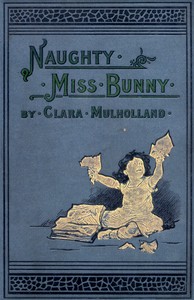
Naughty Miss Bunny A Story for Little Children — Inside the Classic
Childrens Adventures
36,040 recorded words. 1 minutes difference from this book's estimate.
View Gutenberg source #19889
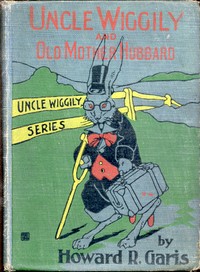
This digital edition of Uncle Wiggily and Old Mother Hubbard Adventures of the Rabbit Gentleman with the Mother Goose Characters — Text and Context is described by source-level measurements including 35,857 words, 2 hr 36 min estimated reading time, and 27 detected text sections.
The text analysis averages about 14.5 words per sentence, while the detected sections provide another way to judge how the source is divided.
Project Gutenberg metadata also associates the work with “Animals -- Juvenile fiction,” connecting these edition facts with the source record’s subject description.
Explore this collection
These alternatives are selected using recorded categories and estimated reading time.
About 157 minutes
Childrens Adventures
36,040 recorded words. 1 minutes difference from this book's estimate.
View Gutenberg source #19889About 165 minutes
Childrens Adventures
37,786 recorded words. 9 minutes difference from this book's estimate.
View Gutenberg source #21462About 143 minutes
Childrens Adventures
32,755 recorded words. 13 minutes difference from this book's estimate.
View Gutenberg source #27052Search stored excerpts and compare books → Choose by your preferences →
Choices use stored catalog measurements. Estimates vary with reading speed. A shared category is a catalog label, not a claim that two books have the same argument or literary quality.
Search reads excerpt text stored with this catalog and links to its associated Gutenberg record. The connection is stored in the site database; this tool does not recheck that every excerpt is word-for-word identical to that external record. Excerpt search does not cover every chapter and does not verify historical publication dates.
Catalog snapshot checked: 2026-09-25. Coverage: 94 public books, 94 available source excerpts.
Read the complete public-domain text at its original source.
Read on Project GutenbergFrom the first chapter, Uncle Wiggily Longears is introduced as an old rabbit gentleman living in a hollow-stump bungalow with Nurse Jane Fuzzy-Wuzzy, a muskrat lady. The opening excerpt immediately establishes two recurring features: his rheumatism, which causes him to need crutches and medicine, and his willingness to help others. When he meets the cow with the crumpled horn, the dialogue reveals that the cow is trying to jump over the moon, referencing the nursery rhyme. This sets the pattern for the book: each chapter likely pairs Uncle Wiggily with a different Mother Goose character, blending his ongoing ailments with problem-solving adventures.
Uncle Wiggily's rheumatism is not just a background detail but a driving force in the narrative. In the first chapter, he wakes up so stiff he can hardly move, and Nurse Jane must fetch medicine from Dr. Possum. The humor comes from the mix-up: Dr. Possum says to rub the medicine on the pain, but Nurse Jane misunderstands and asks, “Rub the cork on?” This recurring physical limitation makes Uncle Wiggily a vulnerable hero, relying on his crutch and others' help. Later excerpts might show how his ailment affects his adventures, perhaps forcing creative solutions or adding urgency to his tasks.
The cow with the crumpled horn is the first of many nursery-rhyme figures. She explains her predicament by quoting “Hi-diddle-diddle” and references her role in “the house that Jack built.” This self-aware integration of Mother Goose lore suggests each chapter will introduce a new character with a familiar problem. For instance, the table of contents lists encounters with Little Boy Blue, Little Bo-Peep, Jack and Jill, and Old Mother Hubbard herself. The excerpts show that Uncle Wiggily's role is to resolve their troubles—often through simple kindness or clever use of his crutch—while the characters provide comic explanations for their canonical actions.
The book's 27 chapters follow a clear episodic pattern: Uncle Wiggily meets a Mother Goose character, helps them, and moves on. The first chapter ends with a secondary adventure about Jimmie Wibblewobble, the boy duck, who loses a penny for a lollypop. This two-part structure—main encounter plus a smaller incident—may be repeated throughout. The language is formulaic, with phrases like “kindly said Uncle Wiggily” and “Oh, dear!” appearing frequently. This repetition aids young readers by providing predictability, while the variety of characters keeps each episode fresh. The excerpts do not reveal a overarching plot, so the book likely functions as a collection of standalone tales.
Garis uses playful language and gentle humor. The cow's horn is described as “crumpled and crooked and twisted, just like a corkscrew.” The dialogue includes exclamations like “Moo! Moo! Moo-o-o-o-o!” and “Ouch! Oh, what a pain!” which add auditory texture. Nurse Jane ties her tail “up in a double bow-knot, so she would not step on it.” These details create a whimsical tone suitable for read-aloud sessions. The narrator occasionally addresses the reader directly, as in “You have heard of me, I dare say.” This voice invites participation and makes the story feel like a shared experience.
For a first reading, pay attention to how Uncle Wiggily's rheumatism is both a limitation and a source of humor. Note how each Mother Goose character's problem stems directly from their nursery rhyme, and how the rabbit gentleman's solution often involves his crutch or Nurse Jane's help. The episodic nature means you can read chapters in any order, but the opening establishes the formula. The illustrations by Edward Bloomfield and Lansing Campbell likely add visual cues to the characters' appearances and settings.
There’s something tender about how the rabbit gentleman’s rheumatism slows his hopping, letting him notice the Mother Goose folk more gently. That unhurried rhythm reminded me of listening to a cricket’s steady chirp at dusk—small, patient sounds that shape a whole world. I kept thinking of The Tale of Chirpy Cricket — Key Ideas to Explore, where quiet moments matter just as much.
Answer a few questions and save a private reflection on this device.