About 238 minutes
The Meadow-Brook Girls by the Sea; Or, The Loss of The Lonesome Bar — Key Ideas to Explore
Childrens Adventures
54,586 recorded words. 1 minutes difference from this book's estimate.
View Gutenberg source #17099
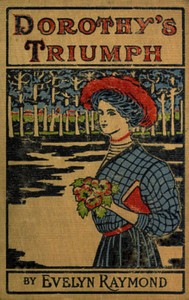
For Dorothy's Triumph — Text and Context, the stored edition analysis reports 54,484 words, 3 hr 57 min estimated reading time, and 6 detected text sections.
The text analysis averages about 16.8 words per sentence, while the detected sections provide another way to judge how the source is divided.
Project Gutenberg metadata also associates the work with “Musicians -- Juvenile fiction,” connecting these edition facts with the source record’s subject description.
Explore this collection
These alternatives are selected using recorded categories and estimated reading time.
About 238 minutes
Childrens Adventures
54,586 recorded words. 1 minutes difference from this book's estimate.
View Gutenberg source #17099About 240 minutes
Childrens Adventures
55,023 recorded words. 3 minutes difference from this book's estimate.
View Gutenberg source #31426About 242 minutes
Childrens Adventures
55,448 recorded words. 5 minutes difference from this book's estimate.
View Gutenberg source #25873Search stored excerpts and compare books → Choose by your preferences →
Choices use stored catalog measurements. Estimates vary with reading speed. A shared category is a catalog label, not a claim that two books have the same argument or literary quality.
Search reads excerpt text stored with this catalog and links to its associated Gutenberg record. The connection is stored in the site database; this tool does not recheck that every excerpt is word-for-word identical to that external record. Excerpt search does not cover every chapter and does not verify historical publication dates.
Catalog snapshot checked: 2026-09-25. Coverage: 94 public books, 94 available source excerpts.
Read the complete public-domain text at its original source.
Read on Project GutenbergEvelyn Raymond opens Dorothy's Triumph with a train journey, where Dorothy Calvert hums “Maryland, my Maryland” and engages in a conversation with Jim Barlow about loyalty to place. The dialogue reveals Dorothy’s reflective nature—she describes her life as “some brilliant dream”—and establishes a leisurely, conversational pace. This early section relies on backstory and character interaction, with long paragraphs of speech that slow the narrative. The voice is warm and slightly formal, typical of early twentieth-century juvenile fiction.
The fishing trip in Chapter VII marks a clear shift in pace. Where earlier chapters dwell on Dorothy’s musings and Jim’s responses, here the prose becomes brisk and event-driven. The text reports actions in quick succession: “The fish began to bite with unusual frequency,” and the characters “wound in their lines” as the sun declined. The count of trout—seventeen for Dorothy, sixteen for Gerald—adds a competitive edge. The dialogue, when it appears, is clipped and teasing: “Pooh, pooh!” said Jim. The scene ends with the group climbing back to camp, tired but satisfied, and the pace slows again with the “odor of fried fish.” This alternation between rapid action and reflective calm is a recurring structural pattern.
Raymond’s narrative voice shifts when introducing Len, a rescued boy. The prose becomes more sentimental and purposeful. Phrases like “the lad had won his way into the hearts of everyone” and “his resolve to make something of himself” signal a moral tone. The pace slows to accommodate planning: “Aunt Betty and Dorothy were so taken with his winning manners… they already regarded him as a protégé.” This section contrasts with the fishing episode’s rapidity, using longer sentences and future-oriented language. The voice here is less about immediate action and more about character development and social uplift, a common thread in Raymond’s work.
Chapter VIII, “The Journey Home,” compresses time with phrases like “The next few days passed quickly” and “At one time or another the whole face of the mountain was explored.” This summary technique accelerates the narrative, covering multiple excursions in a single paragraph. The discovery of stalactites and stalagmites is mentioned briefly, as are the plans for Len’s education. The pace then slows again for the departure morning, with detailed packing of “camping paraphernalia” into the automobile. Raymond uses this alternation between summary and scene to manage the story’s rhythm, keeping the reader engaged without lingering too long on any single event.
Raymond’s handling of pace—shifting between leisurely dialogue, brisk action, and compressed summary—gives Dorothy’s Triumph a varied rhythm that suits its episodic structure. Readers may note how the author uses changes in tempo to highlight key moments: the fishing contest, the introduction of Len, and the return journey. Pay attention to how quickly or slowly time passes in each chapter; this pacing often signals what Raymond considers most important.
Some books stay with you less for their plot than for how they make you feel stepping back into regular life afterward. I felt that way after Dorothy’s Triumph, with its quiet mountain air and the slow way Len’s trust grows. It reminded me of another old story, Little Sky-High; Or, The Surprising Doings of Washee-Washee-Wang — Context and Discussion, which left me with that same tender ache of watching someone find their footing.
Build a private reading journal entry for this title.