1

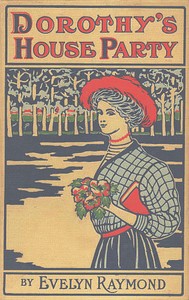
Dorothy's House Party — Reading Notes
(6 User reviews)
1534
Project Gutenberg
2009
Not confirmed
Orphans -- Juvenile fiction; Entertaining -- Juvenile fiction; Circus -- Juvenile fiction; Best friends -- Juvenile fiction; Chester, Dorothy (Fictitious character) -- Juvenile fiction
Readers of public-domain and historical texts
Project Gutenberg digital edition
en
Edition facts
Words
61,214
Reading time
267 min
Text sections
7
The source record for Dorothy's House Party — Reading Notes measures this digital text at 61,214 words, 4 hr 27 min estimated reading time, and 7 detected text sections.
The text analysis averages about 16.5 words per sentence, while the detected sections provide another way to judge how the source is divided.
Project Gutenberg metadata also associates the work with “Orphans -- Juvenile fiction,” connecting these edition facts with the source record’s subject description.
Source:
Project Gutenberg record #28805
Evelyn Raymond's 1908 children's novel uses precise diction and dialogue to depict Dorothy's house party, where a violin performance affects guests and a silent, elderly waif named Luna, revealing character through music and setting.
Editorial Edition Score
4.7/5
★★★★★
★★★★★
Calculated from edition completeness, EPUB availability, text structure and catalogue metadata. Not a user rating.
How this score is calculated
- Description quality20 pts
- Title & short description10 pts
- Source metadata20 pts
- Text length15 pts
- Chapters / structure15 pts
- EPUB file integrity20 pts
Total of 100 points, scaled to a 2.5-5.0 range. Editions with an empty description or a missing EPUB file are not scored.
Edition quality
Read the Text
There was honest pleasure in the good fortune which had come to another and yet there was a little envy mingled with the pleasure. It was with a rather vicious little shake that she picked up the soft bath-robe Dorothy had discarded and folded it about her own shoulders; but the reflection of her own face in the mirror opposite so surprised her by its crossness that she stared, then laughed aloud.
"Huh! Ain't you ashamed of yourself, Alfy Babcock? When you put on that two-sticks, ten-penny-nails-look you're homely enough to eat hay! 'Tain't so long ago that Dolly hadn't no more in this world than you've got this minute. Not half so much either, 'cause she hadn't nobody belongin', nobody at all, whilst you had a Ma and Pa and a whole slew of brothers and sisters. All she's found yet is a terrible-old great-aunt and some money. Pa says 'money's no good,' and--I guess I'll go get my breakfast, too."
Her good temper quite restored, this young philosopher skipped away and joined her mother and sisters in the great kitchen where they were already seated at table.
In Mrs. Calvert's room the happy old lady greeted Dorothy with such a warmth of affection that the girl felt no lack of others "belongin'"--for which lack Alfaretta had pitied her--and only yearned to find a way to show her own love and gratitude. There followed a happy half-hour of mutual confidences, a brief reading of the Word, a simple prayer for blessing on their new lives together, and the pair descended to the cheerful room where their guests were assembling: each, it seemed, enjoying to the utmost their beautiful surroundings and their hostess's hospitality.
Jests flew, laughter rang, and the Judge could scarcely refrain from song; when just as the meal was over James Barlow appeared at the long, open window, his mail bag over his shoulder, and instant silence succeeded as each person within waited eagerly for his share in the contents of the pouch.
There were letters in plenty, and some faces grew grave over their reading, while for the Judge there was a telegram which Jim explained had just come to the office where was, also, the post-office.
"Hmm! that ends my vacation in earnest! I meant to stay a bit longer out of business, but--Mrs. Calvert, when's the next train cityward, please?"
"I've half a mind not to tell you! But, of course, if--Dorothy, you'll find a parcel of time tables in that desk by the fireplace. Take them to Judge Breckenridge, please."
Nor was he the only one to make them useful; for it followed that the Deerhurst "infair," begun on the night before and planned to extend over several days must be abruptly ended. The hostess was herself summoned elsewhere, to attend the sick bed of a lifelong friend, and the summons was not one to be denied. Even while she was reading the brief note she knew that she must forsake her post and with a thrill of pride reflected that now she had one of her own kin to install in her place. Young as Dorothy was she must act as the hostess of Deerhurst, even to these gray-headed guests now gathered there. But, presently it appeared, that there would be no guests to entertain. President Ryall was needed to supervise some changes at his college; merchant Ihrie must hasten to disentangle some badly mixed business affairs; Dr. Mantler would miss the "most interesting case on record if he did not come at once to his hospital;" and so, to the four old "boys," who had camped together in the Markland forests, the end of playtime had indeed come, and each after his kind must resume his man's work for the world.
Young Tom Hungerford's furlough from West Point expired that morning, and his mother felt that when he returned to the Academy she must establish herself for a time at the hotel near-by. At her invitation Mrs. Cook and Melvin were to accompany her; that these Nova Scotians might see something of lads' military training outside their own beloved Province.
Catching the general spirit of unrest, Miss Greatorex suddenly announced that it was time she returned to the Rhinelander. Maybe she dreaded being left the only adult in the house, for as yet no mention had been made as to the disposal of her charges, Molly and Dolly. Certainly, she felt that having been burdened with their cares during the long summer she was entitled to a few days' rest before the beginning of a new school year. The lady added:
"Besides all that, I shall have no more than sufficient time to arrange my specimens that I obtained in Markland."
A short silence fell once more upon that company in the breakfast room, and somehow the brilliant sunshine seemed to dim as if a storm were rising; or was it but a mist of disappointment rising to Dorothy's eyes as she glanced from one to another and realized how well she loved them each and all, and how sad the parting was.
But her last glance fell upon her Aunt Betty's face and she bravely smiled back into the kindly eyes so tenderly smiling upon her. After all, that was the Calvert way! To meet whatever came with "head erect and colors flying," and she, too, was Calvert. She'd prove it! Cried she, with that characteristic toss of her brown curls:
"Well, if everybody _must_--what can I do to help? As for you two, darling 'father' and 'mother,' I hope nothing's going to take you away from Deerhurst all of a sudden, like the rest!"
But there was, although there was no suddenness in this decision. As they presently informed her, the crippled ex-postman had made himself so useful at the sanitarium where he had spent the summer that he had been offered a permanent position there, at a larger salary than he had ever received as letter-carrier in Baltimore. He had also secured for his wife Martha a position as matron of the institution; and the independence thus achieved meant more to that ambitious woman than even a care-free home with her beloved foster-child. The death of their old aunt had released Martha from that separation from her husband which had so sorely tried her and, though sorry to part again from Dorothy, she was still a very happy woman.
"We shall always love one another, Dolly dear, but we've come to 'the parting of the ways.' Each as the Lord leads, little girl; but what is the reason, now that Mrs. Calvert's grown-up party has ended, what is the reason, I say, that you don't give a House Party of your very own?"
Those who must go went quickly. By trains and boats, the various guests who had gathered at Deerhurst to welcome Dorothy's home-coming had departed, and at nightfall the great house seemed strangely empty and deserted. Even Ma Babcock had relinquished her post as temporary housekeeper and had hurried across the river to nurse a seriously ill neighbor.
"I may be back tomorrer and I may not be back till the day after never! I declare I'm all of a fluster, what with Mis' Calvert goin' away sort of leavin' me in charge--though them old colored folks o' her'n didn't like that none too well!--and me havin' to turn my back on duty this way. But sickness don't wait for time nor tide and typhoid's got to be tended mighty sharp; and I couldn't nohow refuse to go to one Mis' Judge Satterlee's nieces, she that's been as friendly with me as if I was a regular 'ristocratic like herself. No, when a body's earned a repitation for fetchin' folks through typhoid you got to live up to it. Sorry, Dolly C.; but I'll stow the girls, Barry and Clarry and the rest, 'round amongst the neighbors somewhere, 'fore I start. As for you, Alfy----"
"Oh, Mrs. Babcock! Don't take Alfy away! Please, please don't!" cried Dorothy, fairly clutching at the matron's flying skirts, already disappearing through the doorway.
Mrs. Babcock switched herself free and answered through the opening:
"All right. Alfy can do as she likes. She can go down help tend store to Liza Jane's, t'other village, where she's been asked to go more'n once, or finish her visit to you. Ary one suits me so long as you don't let nor hender me no more."
Not all of this reply was distinct, for it was finished on the floor above, whither the energetic farm-wife had sped to "pack her duds"; but enough was heard to set Alfaretta skipping around the room in an ecstasy of delight, exclaiming:
"I'm to be to the House Party! Oh! I'm to be to the Party!"
But this little episode had been by daylight, and now the dusk had fallen. The great parlors were shut and dark. Prudent old Ephraim had declared:
"I ain't gwine see my Miss Betty's substance wasted, now she's outer de way he'se'f. One lamp in de hall's ernuf fo' seein' an' doan' none yo chillen's go foolin' to ast mo'."
So the long halls were dim and full of shadows; the wind had risen and howled about the windows, which were being carefully shuttered by the servants against the coming storm which Dinah prophesied would prove the "ekernoctial" and a "turr'ble one"; and to banish the loneliness which now tormented her, Dorothy proposed:
"Let's go into the library. There's a fine fire on the hearth and the big lamp is stationary. Ephraim can't find fault with us for using that. We'll make out a list of the folks to ask. You, Alfy, shall do the writing, you do write such a fine, big hand. Come on, Molly girl! I'm so glad you begged to stay behind your Auntie Lu. Aren't you?"
"Ye-es, I reckon so!" answered the little Southerner, with unflattering hesitation. "But it's mighty lonesome in this big house without her and West Point's just--just heavenly!"
"Any place would be 'heavenly' to you, Molly Breckenridge, that was full of boys!" retorted Dolly. "But don't fancy you'd be allowed to see any of those cadets even if you were there. Beg pardon, girlie, I don't want to be cross, but how can I have a decent party if you don't help? Besides, there's Monty and Jim left. They ought to count for something."
"Count for mighty little, seems if, the way they sneak off by themselves and leave us alone. Gentlemen, _Southern_ gentlemen, wouldn't act that way!"
"Oh, sillies! What's the use of spoiling a splendid time? It's just like a cow givin' a pailful of milk then turnin' round and kickin' it over!" cried good-natured Alfy, throwing an arm around each girl's shoulders and playfully forcing her into the cheery library and into a great, soft chair. Of course, they all laughed and hugged one another and acknowledged that they had been "sillies" indeed; and a moment later three girlish heads were bending together above the roomy table, whereon was set such wonderful writing materials as fairly dazzled Alfaretta's eyes. So impressed was she that she exclaimed as if to herself:
"After all, I guess I won't be a trained nurse nor a opera singer. I'll be a writin' woman and have just such pens and things as these."
"Oh, Alfy, you funny dear! You change your mind just as often as I used to!"
"Don't you change it no more, then, Dorothy C.?" demanded the other, quickly.
"No. I don't think I shall ever change it again. I shall do everything the best I can, my music and lessons and all that, but it'll be just for one thing. I lay awake last night wondering how best I could prove grateful for all that's come to me and I reckon I've found out, and it's so--so simple, too."
"Ha! Let's hear this fine and simple thing, darling Dolly Doodles, and maybe we'll both follow your illustrious example!" cried Molly, smiling.
"To--to make everybody I know as--as happy as I can;" answered the other slowly.
"Huh! That's nothing! And you can begin right now, on ME!" declared Miss Alfaretta Babcock, with emphasis.
"Help me to tell who's to be invited."
"All right. Head the list with Alfaretta Babcock."
"Cor-rect! I've got her down already. Next?"
"Molly Breckenridge."
"Good enough. Down she goes. Wait till I get her wrote before you say any more."
They waited while Alfy laboriously inscribed the name and finished with the exclamation:
"That's the crookedest back-name I ever wrote."
"You acted as if it hurt you, girlie! You wriggled your tongue like they do in the funny pictures;" teased Molly, but the writer paid no heed.
"So far so good. But them three's all girls. To a party there ought to be as many boys. That's the way we did to our last winter's school treat," declared Alfaretta.
"Well, there's Jim Barlow. He's a boy."
"He's no _party_ kind of a boy," objected Molly, "and he's only--_us_. She hasn't anybody down that isn't us, so far. We few can't make a whole party."
But Dolly and Alfy were wholly serious.
"Montmorency Vavasour-Stark," suggested the former, and the writer essayed that formidable name. Then she threw down the pen in dismay, exclaiming:
"You'll have to indite that yourself or spell it out to me letter by letter. He'll take more'n a whole line if I write him to match the others."
"Oh! he doesn't take up much room, he's so little," reassured idle Molly, with a mischievous glance toward the doorway which the other girls did not observe; while by dint of considerable assistance Alfy "got him down" and "all on one line!" as she triumphantly remarked.
"That's two boys and three girls. Who's your next boy?"
"Melvin Cook. He's easy to write," said Dolly.
"Yes, Alfy, but he can come back. They'll all have to 'come' except we who don't have to."
A giggle from behind the portieres commented upon this remark and speeding to part them Dolly revealed the hiding figures of their two boy house-mates.
"That's not nice of young gentlemen, to peep and listen," remarked Molly, severely; "but since you've done it, come and take your punishment. You'll have to help. James Barlow, you are appointed the committee of 'ways and means.' I haven't an idea what that 'means,' but I know they always have such a committee."
"What 'they,' Miss Molly?"
"I don't know, Mister Barlow, but you're--it."
"Monty, you'll furnish the entertainment," she continued.
The recipient of this honor bowed profoundly, then lifted his head with a sudden interest as Dorothy suggested the next name:
Even Alfy looked up in surprise. "Do you mean it, Dorothy C.?"
"Surely. After her put Jane Potter."
James was listening now and inquired:
"What you raking up old times for, Dorothy? Inviting them south-siders that made such a lot of trouble when you lived 'up-mounting' afore your folks leased their farm?"
"Whose 'Party' is this?" asked the young hostess, calmly, yet with a twinkle in her eye.
"All of our'n," answered Alfaretta, complacently.
"How many girls now, Alfy?" questioned Molly, who longed to suggest some of her schoolmates but didn't like a similar reproof to that which fell so harmlessly from Alfaretta's mind.
"Five," said the secretary, counting upon her fingers. "Me, and you, and her, and----five. Correct."
"Who's she? I never heard of her," wondered Molly, while Jim answered:
"She's a girl 'way down in Baltimore. Why, Dorothy C., you know she can't come here!"
"Why not? Listen, all of you. This is to be _my_ House Party. It's to be the very nicest ever was. One that everyone who is in it will never, never forget. My darling Aunt Betty gave me permission to ask anybody I chose and to do anything I wanted. She said I had learned some of the lessons of poverty and now I had to begin the harder ones of having more money than most girls have. She said that I mustn't feel badly if the money brought me enemies and some folks got envious."
Here, all unseen by the speaker, honest Alfaretta winced and put her hand to her face; but she quickly dropped it, to listen more closely.
"Mabel was a dear friend even when I was that 'squalling baby' Alfy wrote about. I am to telegraph for her and to send her a telegraphic order for her expenses, though Aunt Betty wasn't sure _that_ would be acceptable to Mr. and Mrs. Bruce. To prevent any misunderstanding on that point, you are to make the telegram real long and explicit. I reckon that's what it means to be that committee Molly named. She'll make six girls and that's enough. Six boys--how many yet Alfy?"
"Three. Them two that are and the one that isn't."
Both Jim and Alfy exclaimed in mutual protest:
"Why Dorothy! That fellow? you must be crazy."
"No, indeed! I'm the sanest one here. That boy is doing the noblest work anybody ever did on this dear old mountain; he's making and keeping the peace between south-side and north-side."
"How do you know, Dorothy?" asked Jim, seriously.
"No matter how I know but I do know. Why, I wouldn't leave him out of my Party for anything. I'd almost rather be out of it myself!"
Then both he and Alfaretta remembered that winter day on the mountain when Dorothy had been the means of saving Mike Martin from an accidental death and the quiet conference afterward of the two, in that inner room of the old forge under the Great Balm Tree. Probably something had happened then and there to make Dolly so sure of Mike's worthiness. But she was already passing on to "next," nodding toward Alfy, with the words:
"The two Smith boys, Littlejohn and Danny."
Jim Barlow laughed but did not object. The sons of farmer Smith were jolly lads and deserved a good time, once in their hard-worked lives; yet he did stare when Dorothy concluded her list of lads with the name:
"You don't know him very well, Dolly girl. Beside that, he'll make an odd number. He's the seventh----"
"Son of the seventh son--fact!" interrupted Alfaretta; "and now we'll have to find another girl to match him."
"I've found the girl, Dolly, but she won't match. Helena Montaigne came up on the train by which your Father John left for the north. You could hardly leave her out from your House Party, or from givin' her the bid to it, any way."
"Helena home? Oh! I am so glad, I am so glad! Of course, she'll get the 'bid'; I'll take it to her myself the first thing to-morrow morning. But you didn't mention Herbert. Hasn't he come, too?"
James Barlow nodded assent but grudgingly. He had never in his heart quite forgiven Herbert Montaigne for their difference in life; as if it were the fault of the one that he had been born the son of the wealthy owner of The Towers and of the other that he was a penniless almshouse child. Second thoughts, however, always brought nobler feeling into the honest heart of Jim and a flush of shame rose to his face as he forced himself to answer.
"Yes, course. The hull fambly's here."
Dorothy checked the teasing words which rose to her lips, for when ambitious Jim relapsed so hopelessly into incorrect speech it was a sign that he was deeply moved; and it was a relief to see Alfaretta once more diligently count upon her fingers and to hear her declare:
"We'll never'll get this here list straight and even, never in this endurin' world. First there's a girl too many and now there's a girl too short!"
"Never mind; we'll make them come out even some way, and I'll find another girl. I don't know who, yet, and we mustn't ask any more or there'll be no places for them to sleep. Now we've settled the guests let's settle the time. We'll have to put it off two or three days, to let them get here. I wish your cousin Tom Hungerford could be asked to join us but I don't suppose he could come," said Dolly to her friend Molly.
"No, he couldn't. It was the greatest favor his getting off just for those few hours. A boy might as well be in prison as at West Point!"
"What? At that 'heavenly' place? Let's see. This is Wednesday night. Saturday would be a nice time to begin the Party, don't you all think?"
"Fine. Week-end ones always do begin on Saturday but the trouble is they break up on Monday after;" answered Molly.
Evelyn Raymond opens Dorothy's House Party with Dorothy waking in a strange, charming room, her disorientation quickly replaced by delight at the white-tiled bathroom and soft towels—details that signal a shift from her earlier life. The narrative voice blends colloquial dialogue (“Alfy! Alfy Babcock!”) with descriptive passages that linger on sensory specifics, such as “yeller artemisias” in a yellow bowl. This attention to domestic objects and affectionate nicknames establishes a world where material comfort and friendship intertwine.
Diction and the Texture of Daily Life
Raymond’s word choices ground the story in a particular, tangible world. Characters use regional or informal speech: Alfy calls Dorothy “Dolly Doodles,” and the narrative describes a “yeller bowl” and “yeller artemisias,” preserving the sound of spoken language. Objects are named with precision—a “white-tiled bathroom,” “great soft towels,” a “lovely bath-robe”—creating a catalogue of comforts that Dorothy notices with wonder. This specificity extends to actions: Dorothy “skips from point to point” examining the room, and later, the violin’s “low undercurrent of melody” is said to “wail and sob.” The diction consistently favors concrete nouns and active verbs, avoiding abstract summary.
Dialogue as Character Marker
Dialogue in the excerpts reveals personality through rhythm and vocabulary. Alfy’s singing of “Old Noah of old he built an ark” and her immediate response to Dorothy’s call show her cheerful, direct nature. Dorothy’s own speech is imperative and affectionate: “Come right up here this very, very minute!” Later, the guests’ reactions to the violin are rendered through internal monologue: Melvin pictures “a far-away Yarmouth garden,” Helena sighs over her deserted parents, and James Barlow reflects on “the apparent hopelessness of ever crossing far beyond its boundaries.” Each character’s thoughts are distinct, shaped by their background—Melvin’s homesickness, Helena’s guilt, James’s ambition. Raymond uses dialogue and interior voice to differentiate the party without heavy exposition.
The Violin Scene and Nonverbal Communication
A central excerpt depicts Dorothy playing a violin medley that shifts from “jumble” to a “minor, moving melody.” The effect on the silent guest Luna is described in physical, almost mechanical terms: she “began to creep toward the player, inch by inch, almost imperceptibly advancing as if drawn forward by some invisible force.” Raymond avoids explaining Luna’s inner state, instead showing her through movement and the reactions of others. The farrier thinks, “Music! Who knows but that was the key to unlock her closed intelligence?” but the narrative does not confirm this. The scene relies on gesture and observation—Luna’s “vacant smile,” her cuddling with the twins—to convey her character, leaving interpretation open.
Structure and the Uninvited Guests
The chapter titles hint at a pattern of intrusion: “The First and Uninvited Guest” and the presence of three “uninvited” characters—the twins and Luna—who form a silent subgroup. In the excerpts, Luna is described as a “Silent Partner,” and the twins are “mischievous” yet protected by her proximity. Raymond uses this structural device to create tension between the planned house party and the unpredictable elements that enter it. The narrative voice notes that Luna “paid scant attention to them, no more than she did to anything, except gay colors and music,” establishing a limited but consistent set of responses. This economy of detail allows the reader to infer Luna’s condition without explicit diagnosis.
Readers attentive to Raymond’s craft will notice how she builds character through small, repeated details—the yellow flowers, the bath-robe, the violin’s effect—rather than through authorial commentary. The excerpts offer a compact demonstration of her method: dialogue that sounds spoken, description that selects telling objects, and a plot that advances through the interaction of planned and unplanned guests. These choices reward close reading of the full novel.
There’s a moment in Dorothy’s House Party when music reaches someone who hasn’t spoken in years—old Luna, silent as furniture, suddenly listening. I thought of that quiet opening when reading The Search for the Silver City: A Tale of Adventure in Yucatan — Background and Themes, where the wildness outside eventually finds its way inside a person, too. Some stories just wait that way.
Isaac Taylor
2 weeks agoWilliam Perez
2 weeks agoLeo Adams
3 weeks agoSamuel Martin
1 month agoThere are no comments for this eBook.
Reader reflection
How did this book work for you?
Your answers remain private and are stored only in this browser.
Your progress
0
/
10
2
Was reading this book enjoyable?
3
Would you encourage someone else to read it?
4
How much effort did this book require?
5
Which element worked best for you?
6
Was the book what you thought it would be?
7
How did the pace of the book feel?
8
Could you see yourself revisiting this book?
9
What is the main idea you are taking away?
10









Elijah Davis
3 weeks ago