
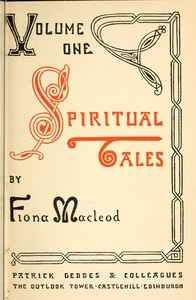
Spiritual Tales by William Sharp
Pulled this off my shelf because the cover looked haunted—and honestly, Spiritual Tales *is* haunted, but not in a cheap way. William Sharp, who secretly wrote as Fiona Macleod, was deeply into Celtic mythology and mysticism, and boy, does that come through. This collection is like sitting by a bonfire listening to a bard who swears they've seen a druid in the fog.
The Story
Each tale is a short trip into the Scottish highlands or Irish countryside, where regular people cross paths with forces that don't make much sense. In one piece, a woman hears a ghostly song on the shore—tied to a drowned sailor. Another centers on a boy who forgets where he came from because he spent too long in the fairy reach. The not-so-secret secret here is that each story asks: What if the old myths aren't just tales? What if they're warnings? Sharp doesn't offer easy explanations—he leaves you standing at the crossroads between that world and ours, your breath catching.
Why You Should Read It
I'm into Sharp's magic for one reason: it's sad in a good way. This isn't your standard scary falso—there's longing everywhere, like someone whispering a poem you can't quite get out of your head. Favorite moment: a brief, heartbreaking conversation between a husband and wife, where he admits maybe his luck came from somewhere barga-for-the-outsider. You start to wonder about deals you've made for comfort and find change and moodiness—more Station Eleven than Blair Witch. There is craft here, but it doesn't show off with jumbles of decorative metaphor; the words feel true. That's rare.
What really nailed me is how Sharp sees nature—the sea is a character with secrets turned bones on shore, the wind smells like other purposes. He tries to filter our collective itch that technology can't bury very deep: that older stories home inside rocks and small hills, waiting for those weak enough—or hungry enough—to talk back.
Final Verdict
Perfect for odd-summer-night readers who loved Juliet Marillier’s Daughter of the Forest, the slow-burn mournfulness of Catherynne M. Valente, or when Neil Gaiman gets truly folky. Not for fans of breakneck thrills. But for anyone ready to sit with a beautifully old-time belief system, find beautiful, hurting love—real—and catch the other world through the crack, inch deep? Yes. You'll be glad for this by choice, weird rest uncovered in lasting places. Warm recommend from cover to lingering final silence.
This text is dedicated to the public domain. It is now common property for all to enjoy.
Patricia Garcia
4 months agoOne of the most comprehensive guides I've read this year.






Emily Perez
8 months agoThe methodology used in this work is academically sound.