About 282 minutes
Under the Great Bear — Story, Setting & Ideas
Young Readers
64,689 recorded words. 22 minutes difference from this book's estimate.
View Gutenberg source #19235
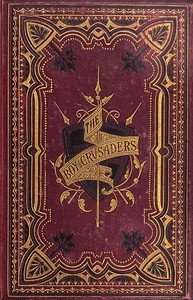
The catalog record for The Boy Crusaders: A Story of the Days of Louis IX. — Story, Setting & Ideas provides practical reading context through 69,700 words, 5 hr 4 min estimated reading time, and 9 detected text sections.
The text analysis averages about 26.2 words per sentence, while the detected sections provide another way to judge how the source is divided.
Project Gutenberg metadata also associates the work with “Biographical fiction,” connecting these edition facts with the source record’s subject description.
Explore this collection
These alternatives are selected using recorded categories and estimated reading time.
About 282 minutes
Young Readers
64,689 recorded words. 22 minutes difference from this book's estimate.
View Gutenberg source #19235About 265 minutes
Young Readers
60,773 recorded words. 39 minutes difference from this book's estimate.
View Gutenberg source #27643About 228 minutes
Young Readers
52,323 recorded words. 76 minutes difference from this book's estimate.
View Gutenberg source #15795Search stored excerpts and compare books → Choose by your preferences →
Choices use stored catalog measurements. Estimates vary with reading speed. A shared category is a catalog label, not a claim that two books have the same argument or literary quality.
Search reads excerpt text stored with this catalog and links to its associated Gutenberg record. The connection is stored in the site database; this tool does not recheck that every excerpt is word-for-word identical to that external record. Excerpt search does not cover every chapter and does not verify historical publication dates.
Catalog snapshot checked: 2026-09-25. Coverage: 94 public books, 94 available source excerpts.
Read the complete public-domain text at its original source.
Read on Project GutenbergJ. G. Edgar's The Boy Crusaders opens not with its young protagonists but with a preface that frames the narrative as an adaptation of Joinville's chronicle. The catalog subjects list 'Biographical fiction' and 'Church history,' yet the excerpts concentrate on battlefield logistics, Saracen intelligence (pigeon-carried messages), and the internal politics of the Mameluke camp. The author's stated aim is to give 'as faithful a picture as possible' of Joinville's events, but the surviving text devotes considerable space to the enemy commander Bibars Bendocdar's ambitions—'neither more nor less than the throne of the sultans'—a detail that complicates the simple 'juvenile fiction' label.
The preface promises a story of 'two striplings' apprenticed to chivalry in a northern English castle, but the excerpts show the narrative quickly shifting to the adult world of crusader politics. The young heroes are nearly invisible in the provided text; instead, the focus falls on King Louis IX, the Count of Artois, and the Mameluke chief Bibars Bendocdar. Edgar's description of the 'carnage of Mansourah' and the 'massacre of Minieh' suggests that the chivalric ideal is tested against brutal realities. The author does not shy from depicting the Crusaders' vulnerability: Greek fire sets surcoats and caparisons ablaze, and the bridge over the Achmoun becomes a source of 'mischief.' The catalog subject 'France -- Kings and rulers' fits Louis's prominence, but the excerpts reveal that the Saracen perspective receives nearly equal weight.
Despite the catalog's 'Church history' classification, the excerpts devote significant attention to the Muslim side. The narrative follows the arrival of Touran Chah, the new sultan, and the jealousy of the emirs toward his Mesopotamian favourites. Bibars Bendocdar is portrayed as a calculating strategist who uses a cuirass 'covered with fleur-de-lis' to deceive his troops into thinking Louis IX is dead. The text even describes the emotional swing in Cairo: first consternation, then joy after the Count of Artois's defeat. This dual perspective is unusual for a children's adventure of the period and may reflect Edgar's reliance on Joinville, who recorded Saracen reactions. Readers expecting a one-sided Christian narrative will find a more complex portrayal of the enemy's motives and tactics.
The chapter titles—'The Carnage of Mansourah,' 'The Massacre of Minieh,' 'St. Louis in Chains'—signal a chronological march through crusade history, but the excerpts show that Edgar occasionally pauses for explanatory passages. For instance, the text explains the significance of the pigeon post and the political context of Touran Chah's arrival. The author's preface acknowledges Joinville as his source, and the narrative voice often adopts a historian's tone, using phrases like 'at that time' and 'unfortunately.' This blend of adventure and chronicle may challenge young readers accustomed to faster-paced fiction. The catalog's 'Biographical fiction' tag is apt, but the excerpts suggest that the biography of Louis IX is interwoven with a broader military and political history.
Readers should note that the excerpts provide only a partial view of the novel's scope. The two boy protagonists, mentioned in the preface, do not appear in the provided text, so their role remains unclear. The catalog subjects emphasize 'Church history' and 'Kings and rulers,' but the surviving passages highlight military strategy and Saracen perspectives. Approach the book as a hybrid: part chivalric adventure, part historical summary, with a strong debt to Joinville's chronicle.
Reading about the boy crusaders and their earnest, dangerous errand, I found myself thinking of quieter days spent with Minnie's Pet Cat — Edition Insights. There is something about the way old books hold a child’s whole world—whether a battlefield or a hearth—that feels the same. The weight of their small, serious concerns lingers gently after the page is turned.
Save your reaction, strongest insight, and memorable passage.